i
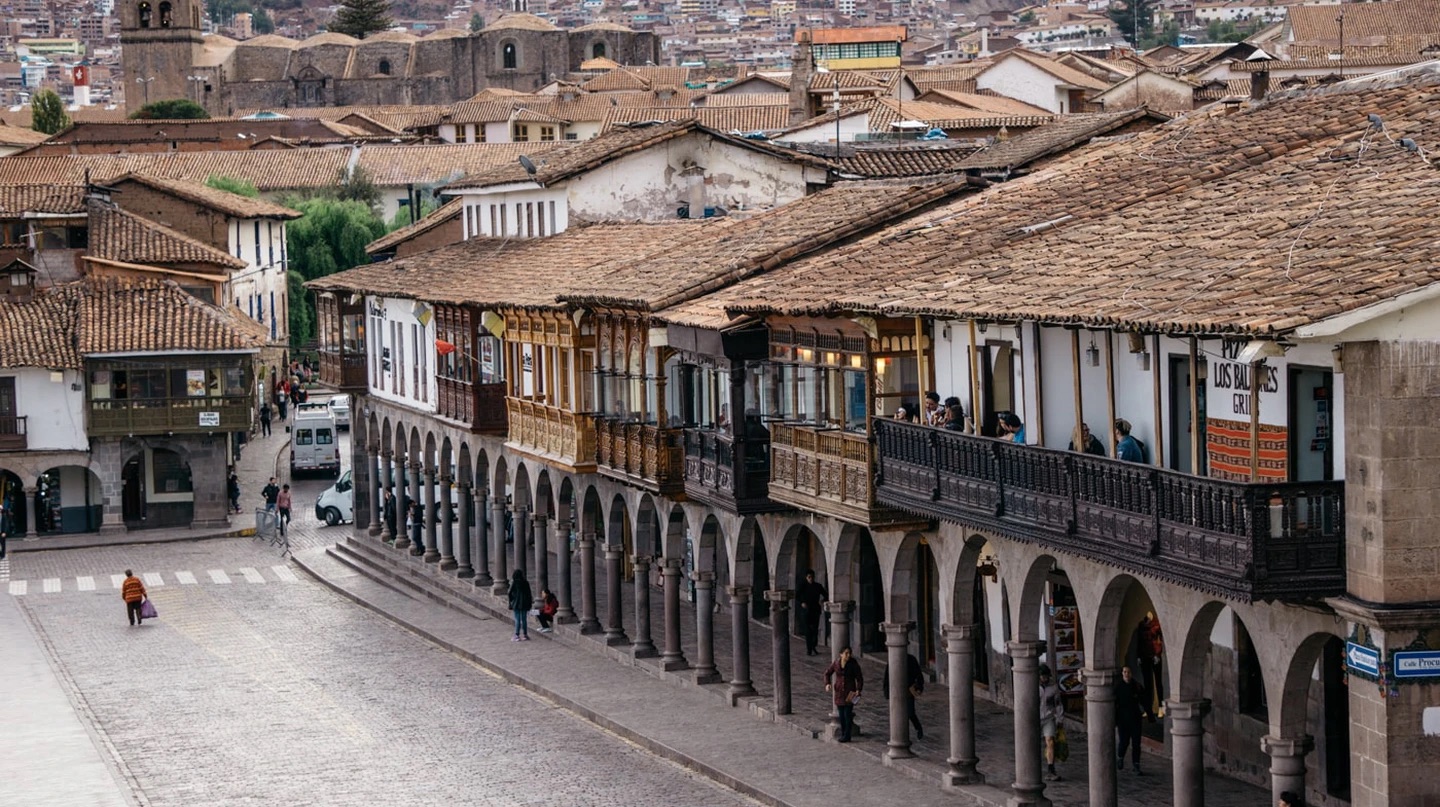
Cusco: tile roofs, stone arcades, and not nearly enough oxygen. (Stock photo.)
High Altitude Hangover
Cuzco, Cusco, or Qosqo: no matter how you spell it, you’ll still be gasping for air. Welcome to a city sitting at a breathtaking 3,400 meters above sea level. For those of us who think a meter is just a yard that went to Europe and got fancy, that’s 11,150 feet, or more than two Mile High Cities stacked on top of each other — breathtaking because of the scenery, but mostly because the oxygen is spread thinner than a budget airline’s seat cushions.
As always, every link in these posts goes straight to the vendor. We don't take commission — on links or on reviews. Ever!
Trust us? Check out our Cusco Wander Map.
*As always, no commissions from our links. We encourage booking early and direct. These maps are always a work in progress, and are curated from all past trips and current research.
These pins also power ai-tinerary, our invite-only itinerary tool. Same stamps, same opinions.
Upon arrival, you will be greeted by the kindest people on the planet, all of whom can tell at a glance that you are currently dying. They will patiently offer you coca tea, which you will drink by the gallon in a desperate attempt to stop your brain from trying to escape through your ears. This is the “Cusco Glow”: a mix of genuine local hospitality and the pale, clammy complexion of altitude sickness.
A confession from the tea-drinkers: the tea is lovely and mostly a warm hug. If you want it to actually do something, skip the cup and chew the leaves. It is more effective, it looks less dignified, and you will be too short of breath to care.
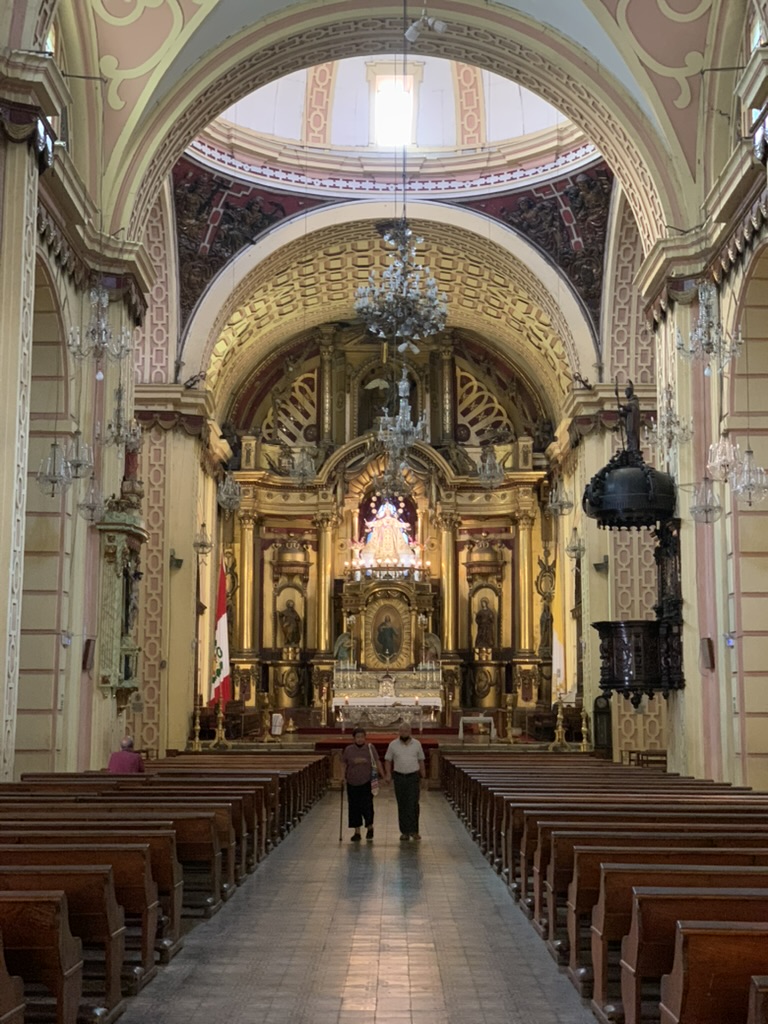
Cusco is the historic heart of the Inca Empire, though if you look closely, you’ll notice the local Diocese did a bit of aggressive rebranding a few centuries back. It’s a city where magnificent Spanish cathedrals sit atop meticulously carved Inca foundations — a literal architectural “copy-paste” job where the bottom layer is earthquake-proof and the top layer has more gold leaf than a billionaire’s bathroom.
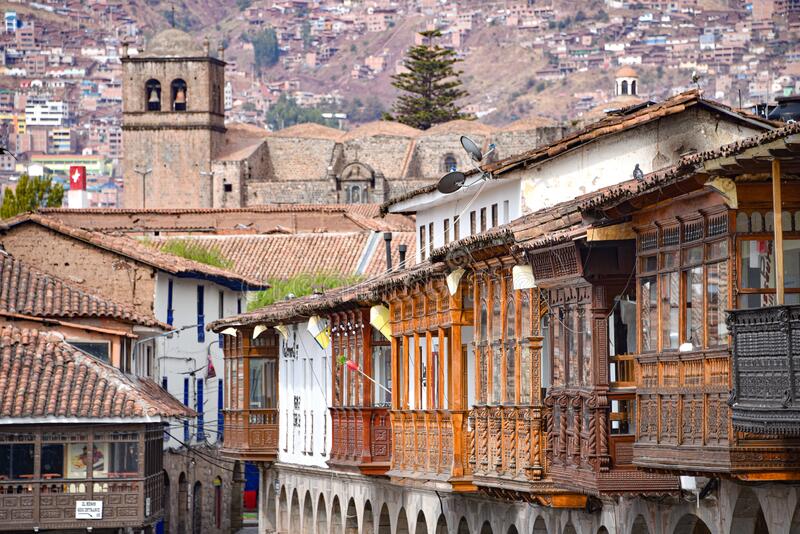
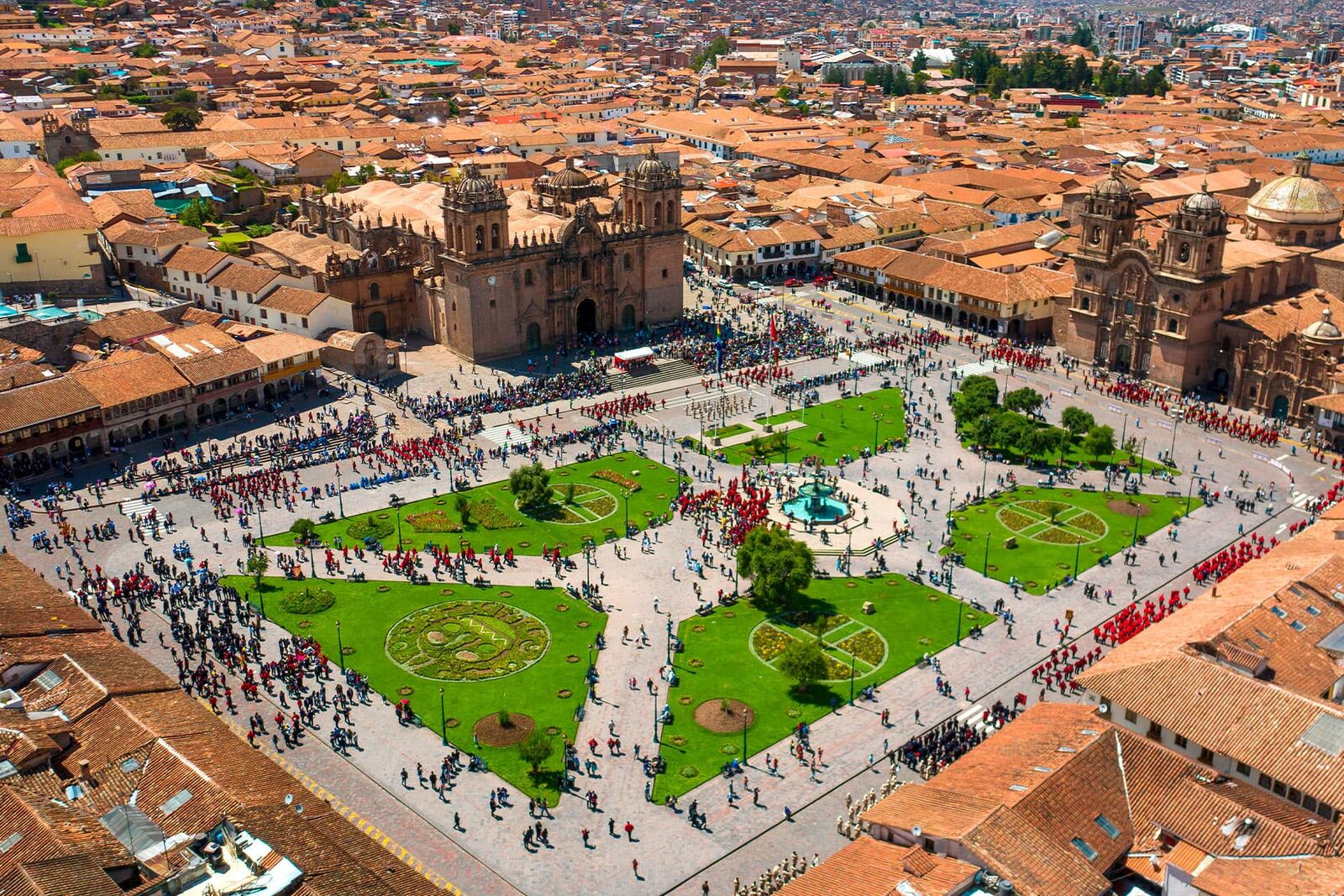
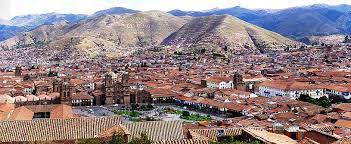
Carved balconies, a Cusco specialty, and the Plaza de Armas from above. (Stock photos.)
Despite the lack of air, the city is vibrantly alive.
In short, Cusco is a masterpiece of history and humanity. It’s a city that will steal your heart — partly because it’s beautiful, and partly because your heart has to work twice as hard just to keep you upright.
The Stache’s tip: walk slow, eat well, chew coca leaves, and keep the oxygen tank on speed dial.
Congratulations! You’ve finally arrived in Cusco. If you were smart and followed the Mustache’s advice, you spent your first few days acclimatizing in the Sacred Valley (about 2,800 meters, or 9,200 feet: already higher than anything Florida has ever attempted) before ascending to the “Imperial City” (3,400 meters, or 11,150 feet: roughly Denver, then Denver again, then a little extra just to be rude). If you didn’t, and instead flew straight in from sea level, please enjoy your current sensation of having a tiny, angry miner swinging a pickaxe inside your skull.
Cusco is home to some of the most spectacular hotels in the world, largely because they’re repurposed colonial convents and palaces. A note on oxygen-enriched rooms: they only drop the feel of the altitude by about 1,000 feet.
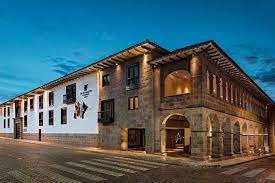
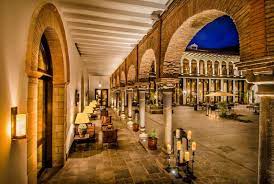
 JW Marriott El Convento Cusco
The Stache pick, for a reason. Built on the site of the ancient colonial convent of San Agustín, it’s a living museum. Ask for a room with an original Inca wall; there is nothing quite like waking up next to 500-year-old stonework that’s still more structurally sound than most modern skyscrapers.
Visit →
Find it on the map →
Belmond Hotel Monasterio
A literal 16th-century monastery where the courtyard is so peaceful you’ll forget you’re gasping for air.
Visit →
Find it on the map →
Belmond Palacio Nazarenas
The city’s only outdoor heated pool, plus oxygen-enriched rooms — a godsend for those who enjoy breathing.
Visit →
Find it on the map →
JW Marriott El Convento Cusco
The Stache pick, for a reason. Built on the site of the ancient colonial convent of San Agustín, it’s a living museum. Ask for a room with an original Inca wall; there is nothing quite like waking up next to 500-year-old stonework that’s still more structurally sound than most modern skyscrapers.
Visit →
Find it on the map →
Belmond Hotel Monasterio
A literal 16th-century monastery where the courtyard is so peaceful you’ll forget you’re gasping for air.
Visit →
Find it on the map →
Belmond Palacio Nazarenas
The city’s only outdoor heated pool, plus oxygen-enriched rooms — a godsend for those who enjoy breathing.
Visit →
Find it on the map →
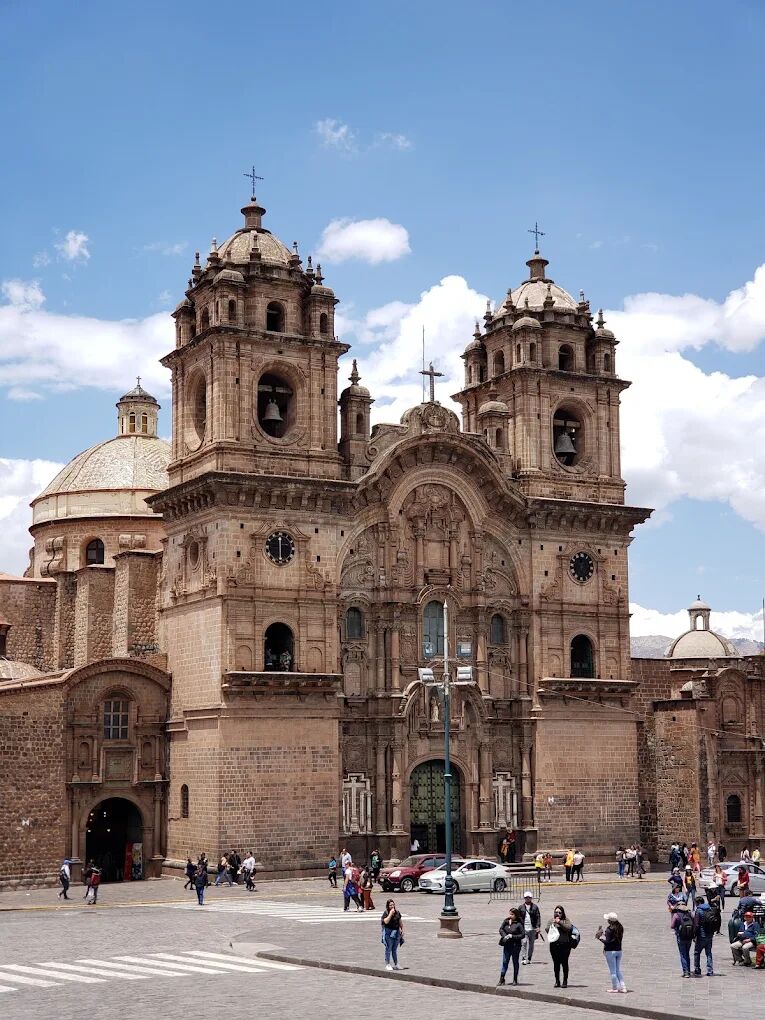
Once you can walk ten feet without needing a nap, explore the layers of the city.
In town: visit Qorikancha, the Temple of the Sun. It’s the ultimate example of the “Diocese rebrand,” where a Dominican priory was built directly on top of the most important Inca temple.
The outskirts: don’t miss Sacsayhuamán (pronounced “Sexy Woman” by every dad who has ever visited). The boulders are massive, the engineering is impossible, and the views of the city are unmatched. For something weirder, head to Q’enqo, a limestone labyrinth used for Inca sacrifices.
 Plaza de Armas
The beating heart of Cusco, and a constant theater of parades, festivals and people in colorful traditional dress. Sit, watch, and do not attempt the stairs on the way back to the hotel too quickly.
Visit →
Map →
Qorikancha (Temple of the Sun)
The most sacred of all Inca sites, and the church here still displays many original Inca ruins. What you walk through is only a portion of what stood here before the Spanish invasion; the floors and walls were said to be covered in gold and silver. The ultimate “before and after” of Peruvian history. Avenida El Sol s/n · +51 84 249176
Map →
Twelve Angled Stone
A stone in the middle of town with twelve angle cuts, each one fitted to its neighbors. The Inca had no metal tools for cutting stone. Their precision is hard to replicate even with today’s tools, and it’s free to stare at.
Map →
Inka Museum
An excellent overview of the Inca empire. Go here first and the rest of the city makes more sense.
Map →
Official site →
Museo Casa Concha
A great museum with artifacts from Machu Picchu. If you’ve just been to the citadel, this is where the pieces ended up.
Visit →
Map →
Traditional Textile Center of Cusco
If you can’t get to one of the weaving cooperatives in the Sacred Valley, this is an excellent place to learn the tradition, watch a demonstration and buy from local artisans. Most items carry the weaver’s name.
Visit →
Map →
Plaza de Armas
The beating heart of Cusco, and a constant theater of parades, festivals and people in colorful traditional dress. Sit, watch, and do not attempt the stairs on the way back to the hotel too quickly.
Visit →
Map →
Qorikancha (Temple of the Sun)
The most sacred of all Inca sites, and the church here still displays many original Inca ruins. What you walk through is only a portion of what stood here before the Spanish invasion; the floors and walls were said to be covered in gold and silver. The ultimate “before and after” of Peruvian history. Avenida El Sol s/n · +51 84 249176
Map →
Twelve Angled Stone
A stone in the middle of town with twelve angle cuts, each one fitted to its neighbors. The Inca had no metal tools for cutting stone. Their precision is hard to replicate even with today’s tools, and it’s free to stare at.
Map →
Inka Museum
An excellent overview of the Inca empire. Go here first and the rest of the city makes more sense.
Map →
Official site →
Museo Casa Concha
A great museum with artifacts from Machu Picchu. If you’ve just been to the citadel, this is where the pieces ended up.
Visit →
Map →
Traditional Textile Center of Cusco
If you can’t get to one of the weaving cooperatives in the Sacred Valley, this is an excellent place to learn the tradition, watch a demonstration and buy from local artisans. Most items carry the weaver’s name.
Visit →
Map →
 Sacsayhuamán Archaeological Park
Perched on the hill overlooking the city. Technically a fortress, famous for massive stones that fit together so perfectly you couldn’t slide a credit card between them. You can walk to it: a 15-minute uphill walk from the Plaza, or a very short taxi ride. Calle Don Bosco s/n · +51 84 223077
Map →
Official site →
Convent of San Francisco & Catacombs of Cusco
Another large colonial church with catacombs. Fine, not essential, and we did not go back.
Map →
Cusco Cathedral (Basilica of the Virgin of the Assumption)
A massive Baroque masterpiece built on the foundations of an Inca palace. Don’t miss the painting of The Last Supper with a roasted guinea pig (cuy) on the platter — the local touch that really makes the meal. Plaza de Armas s/n · +51 84 223232
Find it on the map →
Official site →
Sacsayhuamán Archaeological Park
Perched on the hill overlooking the city. Technically a fortress, famous for massive stones that fit together so perfectly you couldn’t slide a credit card between them. You can walk to it: a 15-minute uphill walk from the Plaza, or a very short taxi ride. Calle Don Bosco s/n · +51 84 223077
Map →
Official site →
Convent of San Francisco & Catacombs of Cusco
Another large colonial church with catacombs. Fine, not essential, and we did not go back.
Map →
Cusco Cathedral (Basilica of the Virgin of the Assumption)
A massive Baroque masterpiece built on the foundations of an Inca palace. Don’t miss the painting of The Last Supper with a roasted guinea pig (cuy) on the platter — the local touch that really makes the meal. Plaza de Armas s/n · +51 84 223232
Find it on the map →
Official site →
 San Pedro Market
The city’s oldest and most vibrant market. Towers of artisanal cheese, mountains of coca leaves, and the “soup section,” where you might see things you didn’t know were edible. A sensory overload in the best way. Cascaparo s/n
Map →
Official site →
San Blas Neighborhood
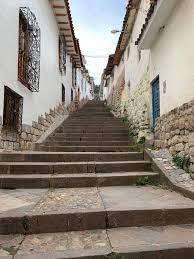
The “Artisans’ Quarter”: a maze of steep, narrow cobblestone streets lined with galleries, coffee shops, and workshops. The trendiest place to get lost while pretending you aren’t out of breath.
Map →
Mercado Artesanal de Cusco
The typical “Andean” market. Most of the products are made in China. The Staches do not recommend. Spend that money at the weaving center instead.
Map →
Mercado Artesanal de Productores Inti Paqarek
Same story, different stall number: another typical “Andean” market with mostly Chinese-made goods. The Staches do not recommend this one either.
Map →
San Pedro Market
The city’s oldest and most vibrant market. Towers of artisanal cheese, mountains of coca leaves, and the “soup section,” where you might see things you didn’t know were edible. A sensory overload in the best way. Cascaparo s/n
Map →
Official site →
San Blas Neighborhood
The “Artisans’ Quarter”: a maze of steep, narrow cobblestone streets lined with galleries, coffee shops, and workshops. The trendiest place to get lost while pretending you aren’t out of breath.
Map →
Mercado Artesanal de Cusco
The typical “Andean” market. Most of the products are made in China. The Staches do not recommend. Spend that money at the weaving center instead.
Map →
Mercado Artesanal de Productores Inti Paqarek
Same story, different stall number: another typical “Andean” market with mostly Chinese-made goods. The Staches do not recommend this one either.
Map →
The Mustache reminder: most of these entries require the Boleto Turístico (tourist ticket), which you should buy at the COSITUC office on Avenida El Sol before you start your trek. If you show up at the Cathedral with just a smile and a pisco sour, you’ll be turned away at the door.
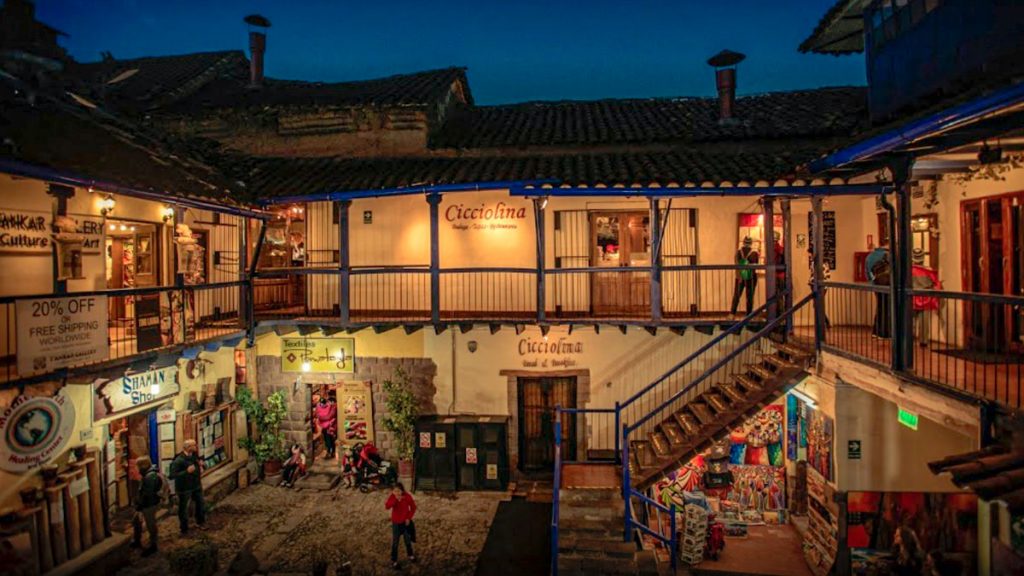
Cusco is a serious food city, and altitude is a lousy excuse to skip dinner. Here is where we ate, and where we wish we hadn’t.
Cicciolina
Our favorite restaurant in Cusco. Book it.
Visit →
Map →
Morena Peruvian Kitchen
Great food and excellent cocktails overlooking the Plaza de Armas.
Visit →
Map →
KUSYKAY Peruvian Craft Food
Well regarded, and a good place for authentic Peruvian food.
Map →
Official site →
Ruru Coffee & Bites
Great coffee.
Map →
Mauka
Pia León’s Cusco restaurant, and we were underwhelmed. It lives inside the Belmond Palacio Nazarenas. Skip it and try her Lima restaurant, Kjolle, which is excellent.
Visit →
Map →
Rucula Peruvian Restaurant
Another great option for typical Peruvian food. Not a regular table of ours, but it checked out.
Map →
Jill’s Café & Restaurant
We did not make it to this little restaurant, but the reviews suggest it is worth checking out. Consider this a rumor, not a recommendation.
Map →
Official site →
Cusco is generally quite safe, but don’t let the mountain air make you too breezy. Stay aware of your surroundings, keep your bags zipped, and avoid dark, empty alleys late at night — basic common sense applies here as much as it does in New York or London.
The canine communalism. You will notice a lot of dogs. Peru has a unique “free-range” dog culture: most of these pups actually have homes. They’re let out in the morning to “go to work” (mostly napping in the sun and socializing with tourists) before returning home for dinner. Cats, on the other hand, are the introverts of the Andes — fiercely protected and kept strictly indoors or in private courtyards, which makes a street-cat sighting in Cusco rarer than a cheap Belmond suite.
The streets of Cusco are home to a complicated social landscape involving the iconic image of indigenous women in vibrant traditional dress carrying baby alpacas. Depending on who you ask, you’ll hear two very different stories.
The “tourist trap” narrative. Critics and some NGOs argue that the women in the main plazas (like the Plaza de Armas) are essentially performers in a “photo-op” economy. They suggest that parading baby alpacas through noisy, paved city streets all day is stressful for the animals, and that the practice can perpetuate a cycle of poverty and dependency on tips rather than sustainable craft or agriculture.
The “livelihood” narrative. On the flip side, many argue this is a vital way for indigenous women from rural communities to participate in the tourism economy on their own terms. For these families, the propina (tip) from a photo is direct income that supports their households, keeping traditional weaving and clothing visible in a rapidly modernizing city.
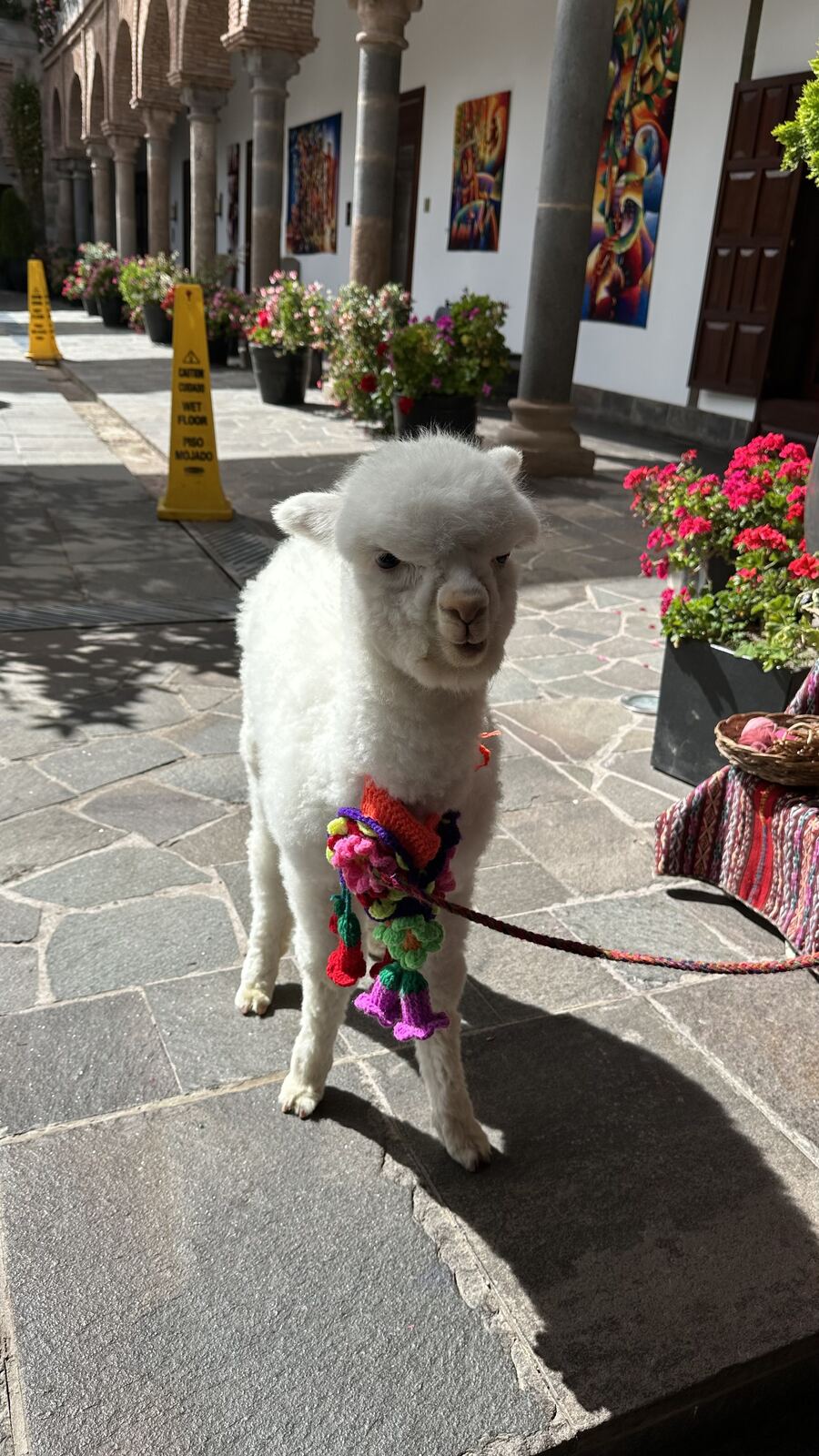
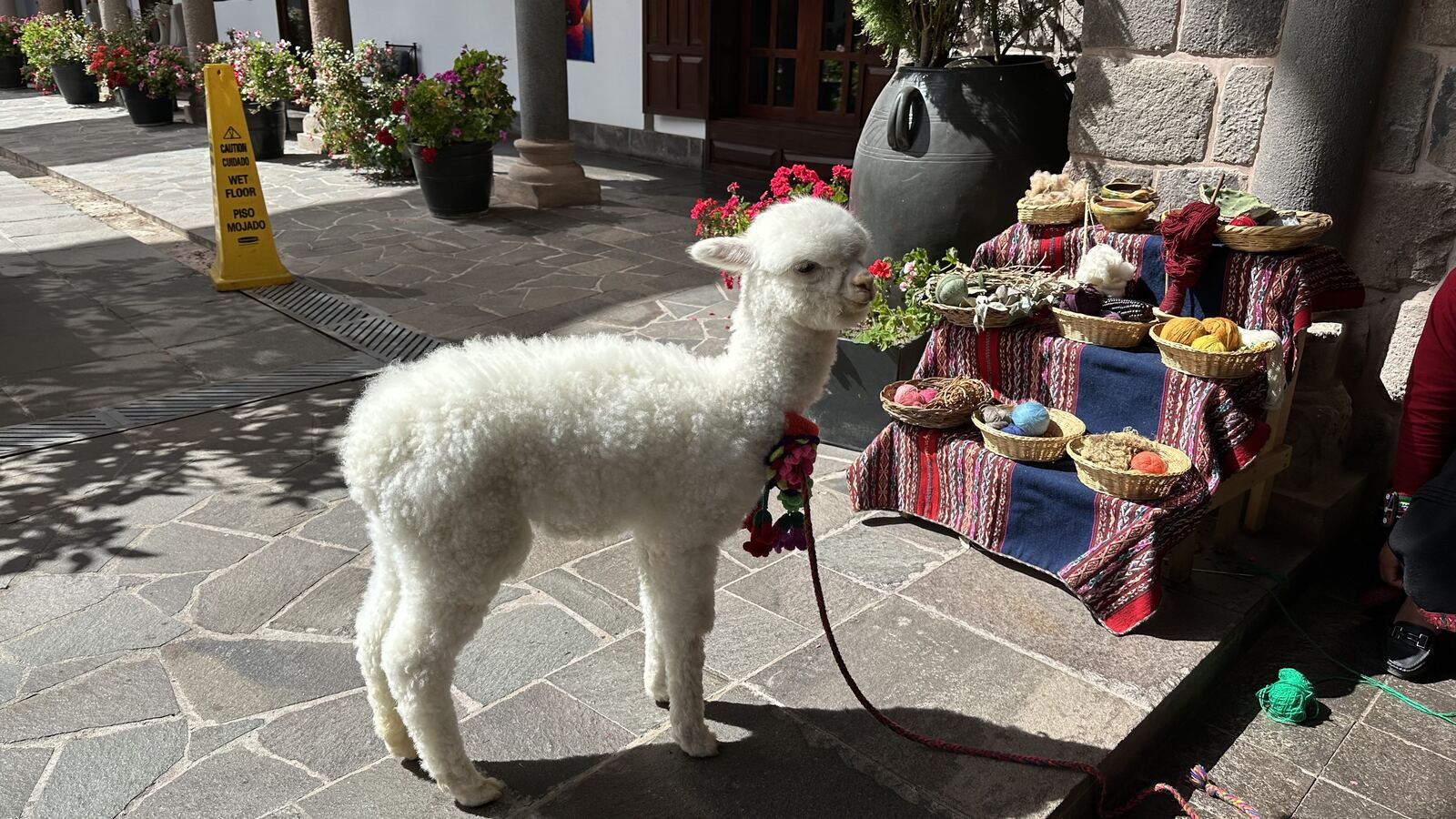
The Mustache experience. We encountered an adorable resident baby alpaca named Panchita at the JW Marriott El Convento. Unlike the frantic hustle of the plaza, this felt calm, respectful, and arguably a bit more “controlled.” The women are subsidized by the hotel, and little Panchita ate, posed and napped all day long. She visits the hotel daily with her human companion, and it felt like a comfortable, low-stress environment for both the animal and the guest.
Our advice. While we loved our time with Panchita, we suggest you do your own research on the ethics of alpaca photography in the city. Read up on local perspectives and animal welfare, and then make a decision that respects what you learn. Whether you skip the photo or support the local women with a generous tip, doing it with awareness is the ultimate traveler move.
Cusco will steal your heart. Then it will make it work twice as hard.
This was stop four of four. Back to the Peru home page → or see every Wander Brag →