i
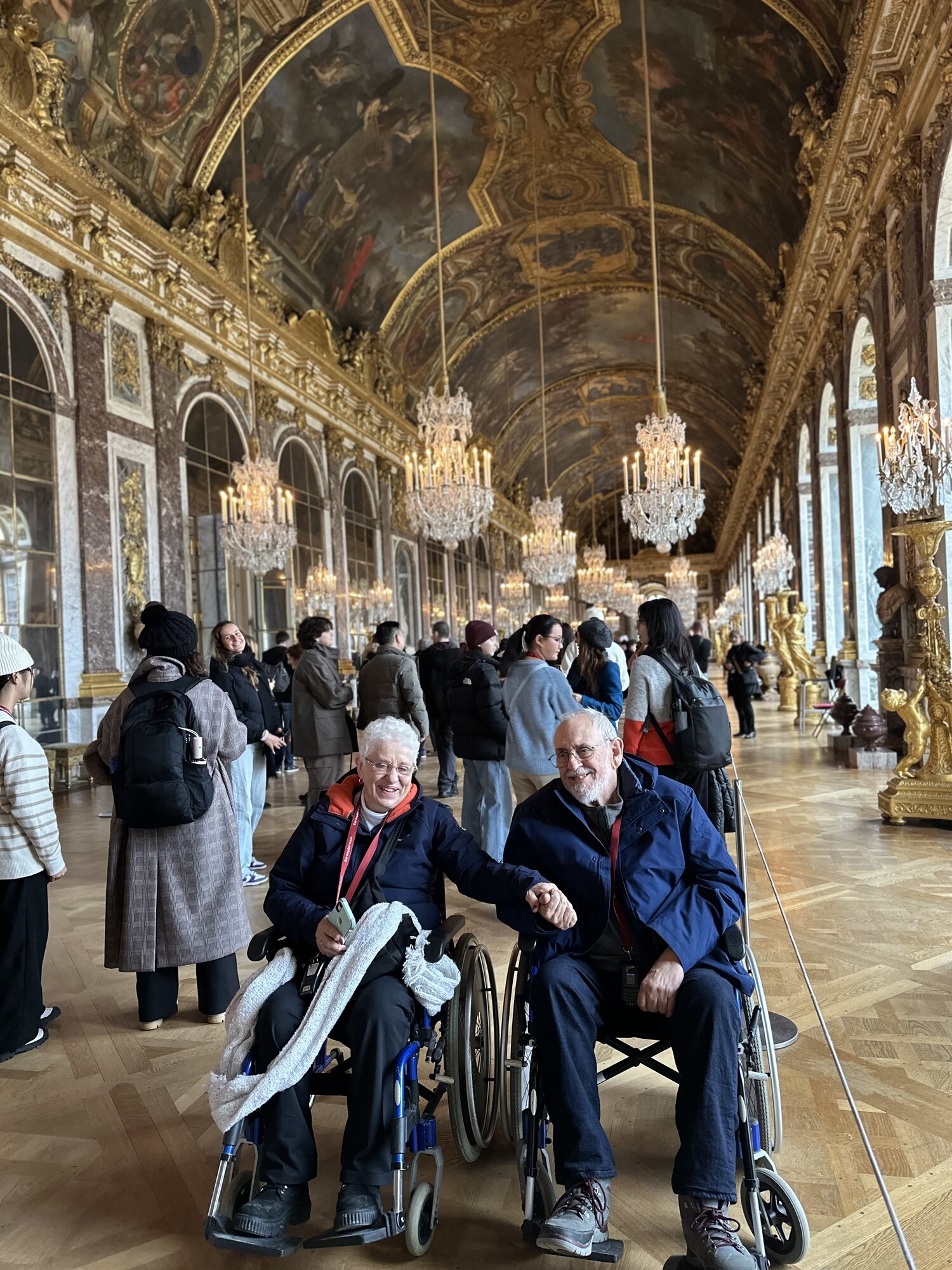
The wheelchairs got a better view of the ceiling than most.
Croissants, Cabaret, and Wheelchair Wonders
Traveling to Paris with mobility-impaired octogenarian parents is less a vacation and more a high-stakes military campaign against a city that considers cobblestones a legitimate form of urban infrastructure. Picture a cross between a tour guide, a mule, and an amateur traffic warden. The locals, accustomed to tourists sprinting past in a blur of athletic socks and fanny packs, watch in bemused awe as our small but regal procession advances at the pace of a leisurely funeral cortege — parting crowds and commandeering café tables with the imperious authority of minor royalty.
As always, every link in these posts goes straight to the vendor. We don't take commission — on links or on reviews. Ever!
Trust us? Check out our Paris Wander Map.
*As always, no commissions from our links. We encourage booking early and direct. These maps are always a work in progress, and are curated from all past trips and current research.
These pins also power ai-tinerary, our invite-only itinerary tool. Same stamps, same opinions.
Paris wraps its romantic boulevards and iconic landmarks in a seductive promise of effortless strolling — provided, of course, you don't mind cobblestones that feel like nature's own calf-ripper. For anyone planning a trip with mobility-impaired parents in their mid-80s, that idyllic vision of wandering from café to cathedral requires a swift and pragmatic reality check: spontaneous sauntering is off the table, and you'll trade the fantasy of Parisian flânerie for the hard-won skills of a wheelchair-piloting general.
With meticulous planning — scouting accessible accommodations, accepting the Métro's unapologetic disdain for anyone not auditioning for Cirque du Soleil, and ruthlessly prioritizing attractions with elevators instead of Everest-level staircases — you can transform the City of Light from a potential obstacle course into a triumph of strategy. Comfortable pacing, reliable transportation, and a healthy willingness to commandeer the nearest flat surface turn what could be a comedy of errors — complete with stalled wheelchairs and muttered curses at every cracked pavement — into a series of cherished, manageable experiences. Paris still dazzles, even approached at the speed of a leisurely funeral procession.
While a typical Stache trip means hours of research chasing the best boutique hotel, this trip leaned into corporate hotels on purpose — they tend to offer the accessibility features that actually matter: reliable elevator access to every floor, a convenient location that minimizes walking, and, since we were flying in on separate routes, real luggage and general assistance if a flight ran late.
At the time we held Marriott Ambassador status, which comes with a dedicated Ambassador for special requests — an easy tiebreaker. We settled on the Renaissance Paris Nobel Tour Eiffel, tucked into the chic, peaceful 16th Arrondissement just around the corner from the Eiffel Tower, the Arc de Triomphe, and the Champs-Élysées, and an easy walk to several restaurants. The staff went out of their way for our parents — a room near the elevator to limit extra walking, help with every bag, and a breakfast pastry display our parents did serious damage to.
Paris' food scene is genuinely spectacular, and, like London, far more international than the postcard version gives it credit for — we ate our way through classic bistros, a Montmartre trattoria, and everything in between without ever feeling like we'd wandered off-script. What the guidebooks don't tell you: none of it is universally accessible. Plenty of beautiful spots come with a step at the entrance, a spiral staircase to the only restroom, or a second-floor dining room that simply isn't going to work for someone in a wheelchair. Call ahead, every time — it saves everyone the indignity of turning around on the sidewalk.
And here's what actually surprised us: you get out of Paris what you put in. We are not fluent in French, and it didn't matter nearly as much as being patient and courteous did. We were warmly welcomed in English everywhere we went, no eye-rolling included, and the staff who dealt with our parents treated them like visiting royalty. Whatever reputation the French have for being difficult with tourists, nobody told the people we actually met — they rolled out the red carpet for two octogenarians and never once made it feel like an inconvenience.
Paris has an excellent Métro system with famously limited accessibility — exactly one fully accessible line (14). We leaned hard on Uber instead: convenient, less physically demanding, and kind to fatigue levels. Careful planning of walking routes and distances, with regular breaks and easy access to rest spots, made for a smoother, more relaxed journey that respected our parents' pace.

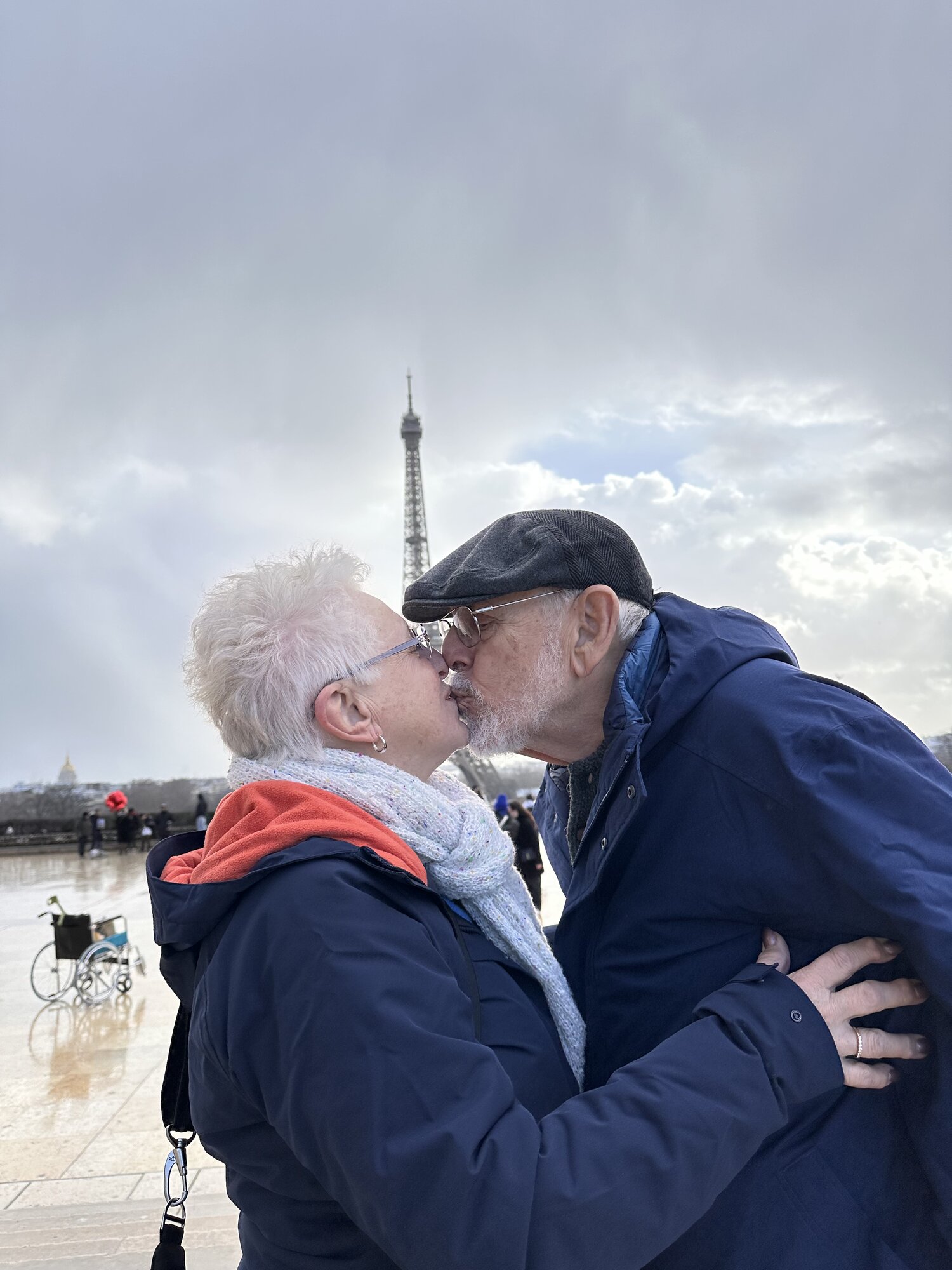
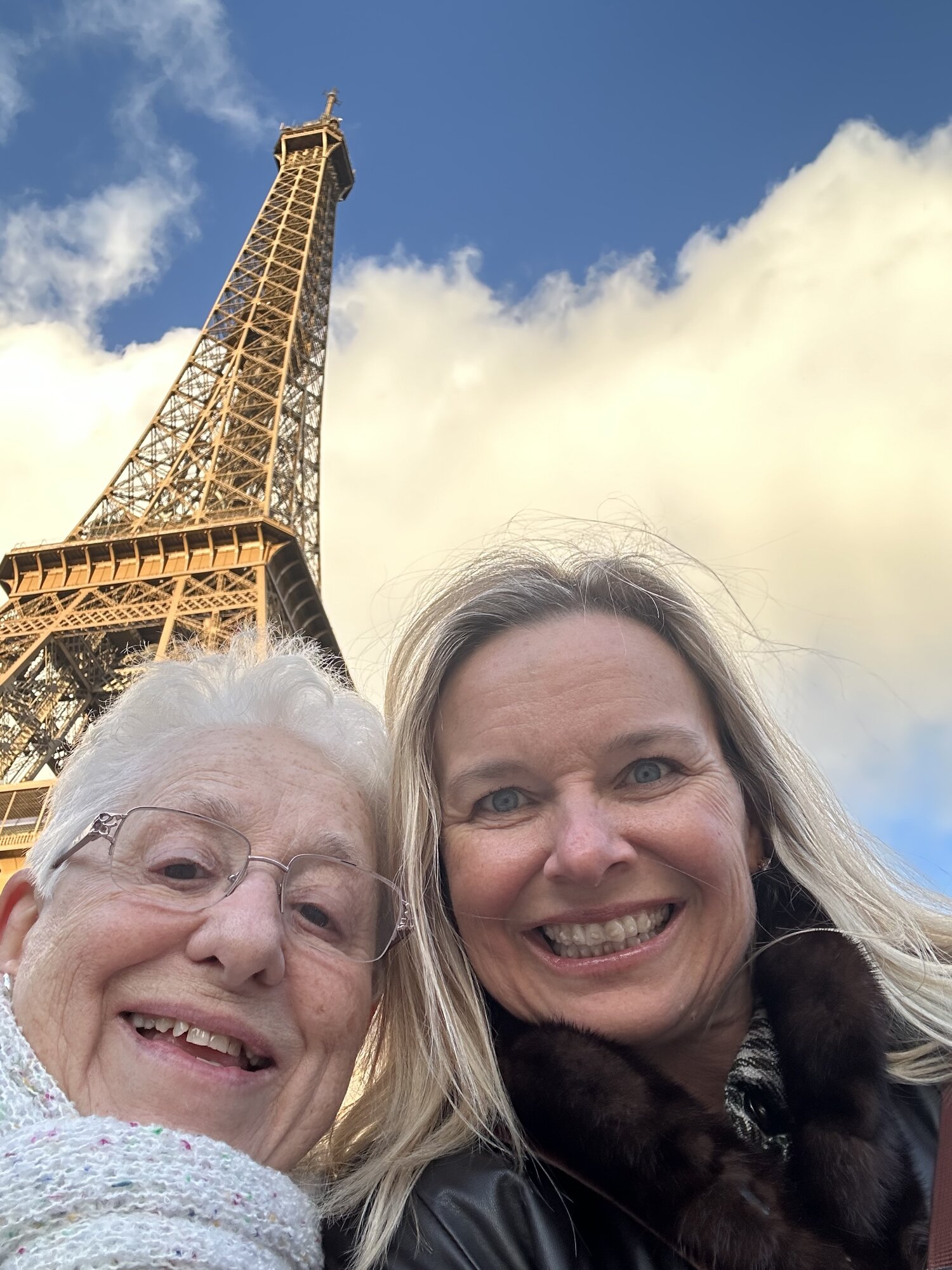
The Eiffel Tower — Dad couldn't handle the extra walking after a transatlantic red-eye and went back to the hotel to rest. My mother-in-law (a.k.a. the energizer bunny) went up; I stayed firmly on the ground with my healthy fear of heights. Her report: the main elevator to the first and second floors was spacious and the staff were kind. Down at my level, the cobblestone paths around the base were a bit tricky with a few unexpected steps. Comfortable shoes and a companion are non-negotiable. Pre-purchase tickets, and go in low season (we went mid-January) — high season lines mean serious extra fatigue.
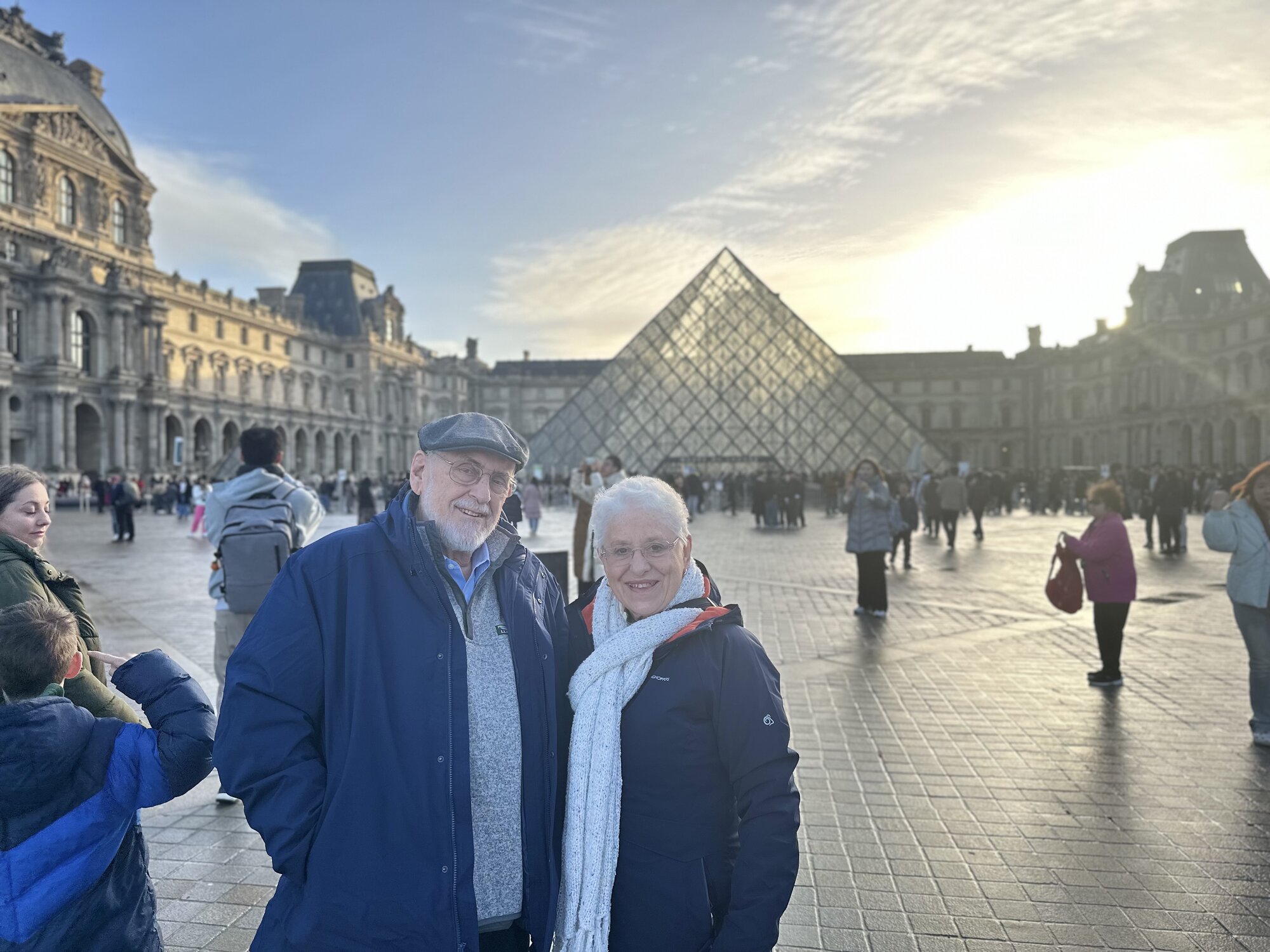
The Louvre — a breeze for accessibility. Free wheelchairs at the information desk, staff who quickly guided us to elevators and priority lines bypassing long queues, and a genuine perk: viewing the Mona Lisa from the handicapped area, ahead of the crowd. We took an Uber to Rue de Rivoli and walked to the Pyramid entrance; low season again made the difference. Preview the museum's online map before you go and plan your path — we over-booked the day and had to skip Monet's Water Lilies at the nearby Musée de l'Orangerie, but did get a short, lovely walk along the Seine.
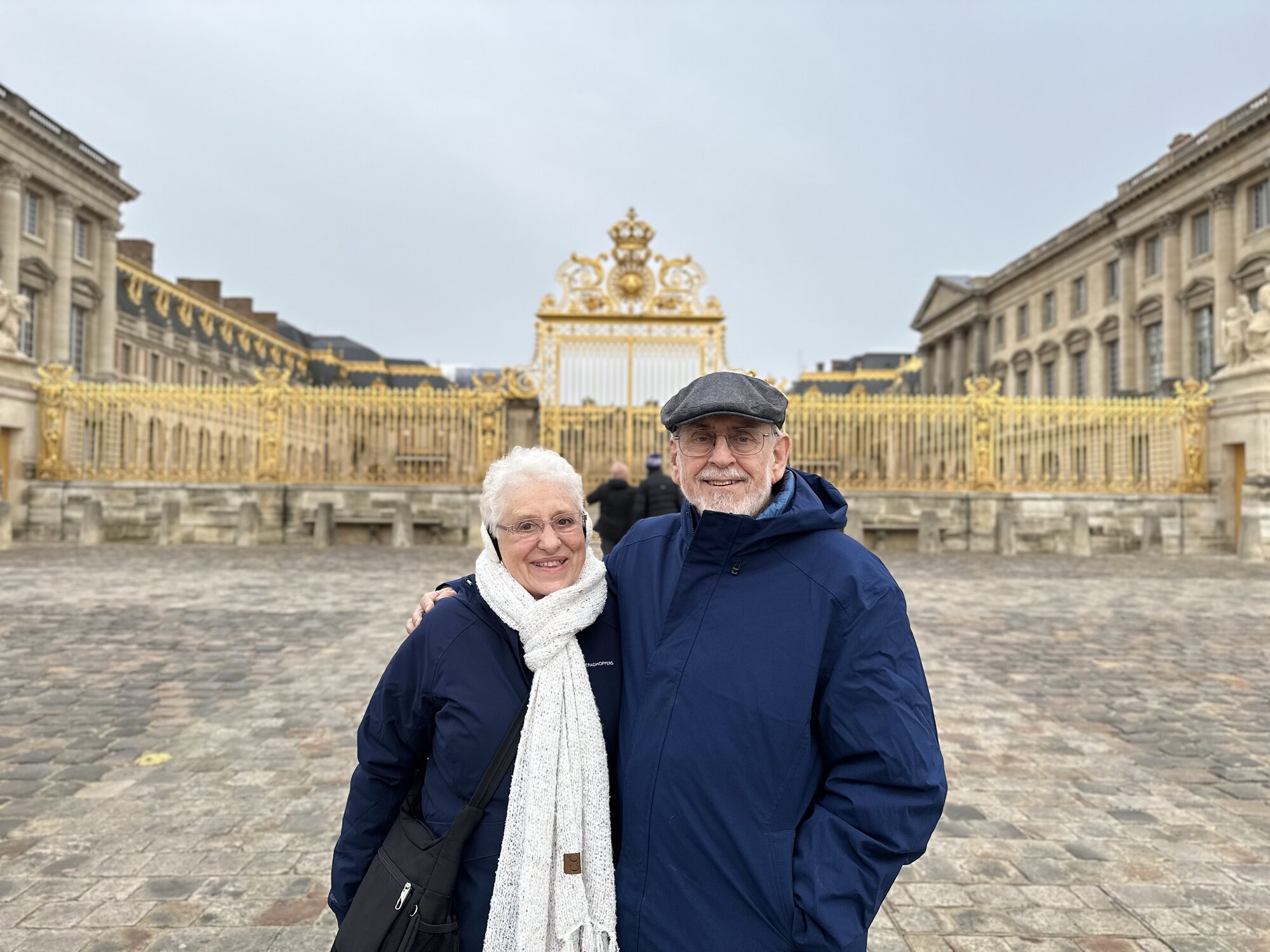
Palace of Versailles — slightly more challenging: a long walk from the drop-off area, narrow interior walkways, and gravel garden paths. Free wheelchairs were provided at the entrance and ramps gave access to the palace interiors, including the Hall of Mirrors, with proactive staff directing us to accessible routes. Some visitors (not locals) were pushy about blocking paths or cutting in front of wheelchairs for a better view — different cultural standards, take a breath and let it go. Book an accessible guided tour in advance if you can; it would have made navigation seamless. Versailles is a short drive from the city center, technically accessible by public transportation, but we used Uber to minimize walking.
Mom's Croissant Class — Mom's big request was a croissant-making class. We found a small school near Notre-Dame, Maison Fleuret, on a good feeling, and it paid off. With a gluten allergy, He-Stache and I skipped the class ourselves and took some rare alone time to walk the city instead — which meant sending our parents off via Uber, alone, for their first time navigating Paris solo. When they couldn't find the entrance, the teacher came out and found them on the street. They were the only students, the school didn't cancel on them, and Mom proudly shared her buttery results with Dave over coffee. I was, for the record, jealous.
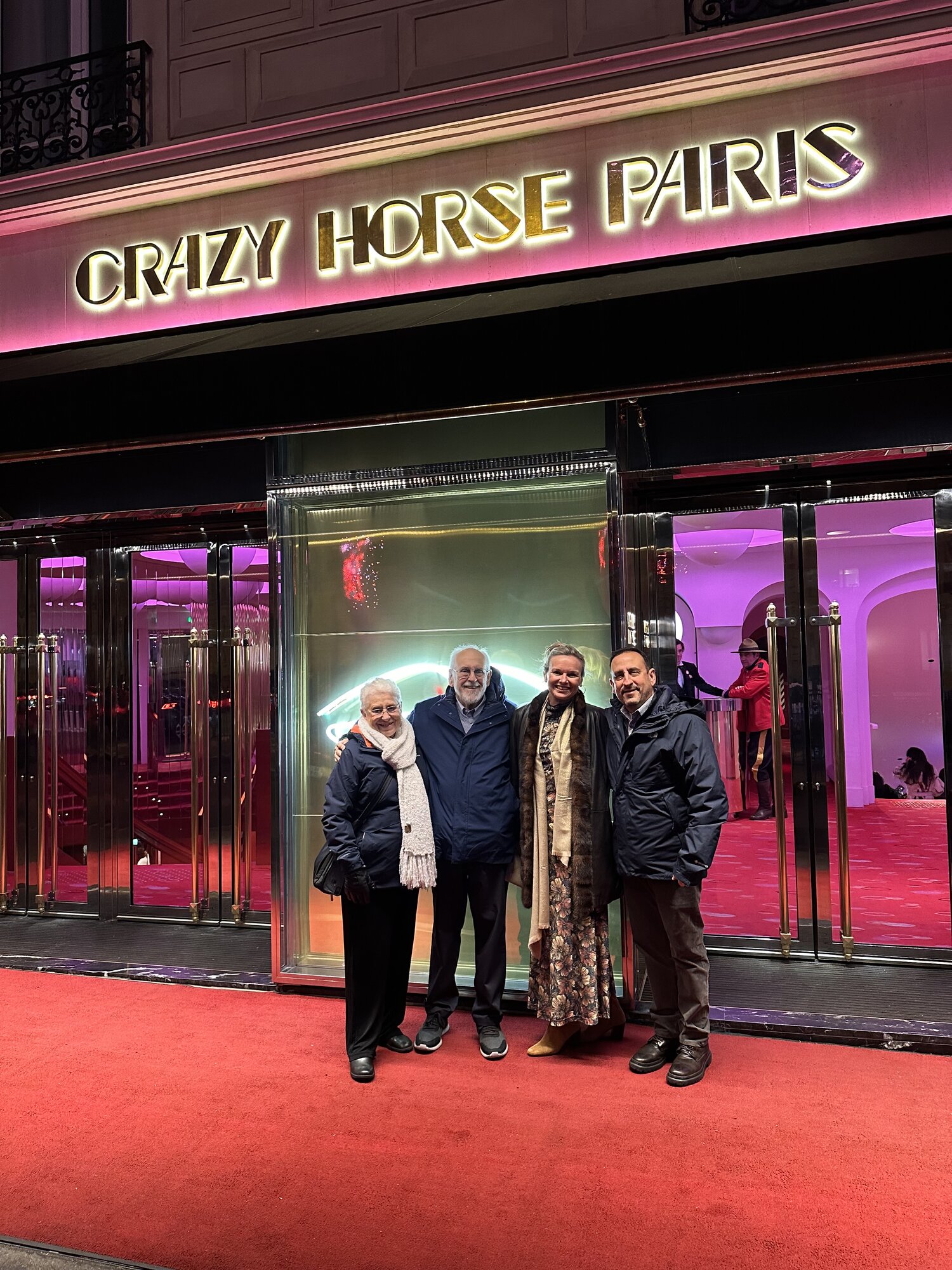
Dad's Crazy Horse Adventure — Dad's big request was a different kind of art: the Moulin Rouge. We redirected him to the Crazy Horse Paris Cabaret instead, for the smaller theater, better seating, and closer proximity to our hotel. Dad was enchanted — possibly the first show he's stayed awake for in decades — and we secured accessible seating with a clear view. Staff assistance made for a comfortable, memorable evening. We opted for the "Crazy Champagne" experience; be advised that very little (think a short piece of black tape) is left to the imagination.
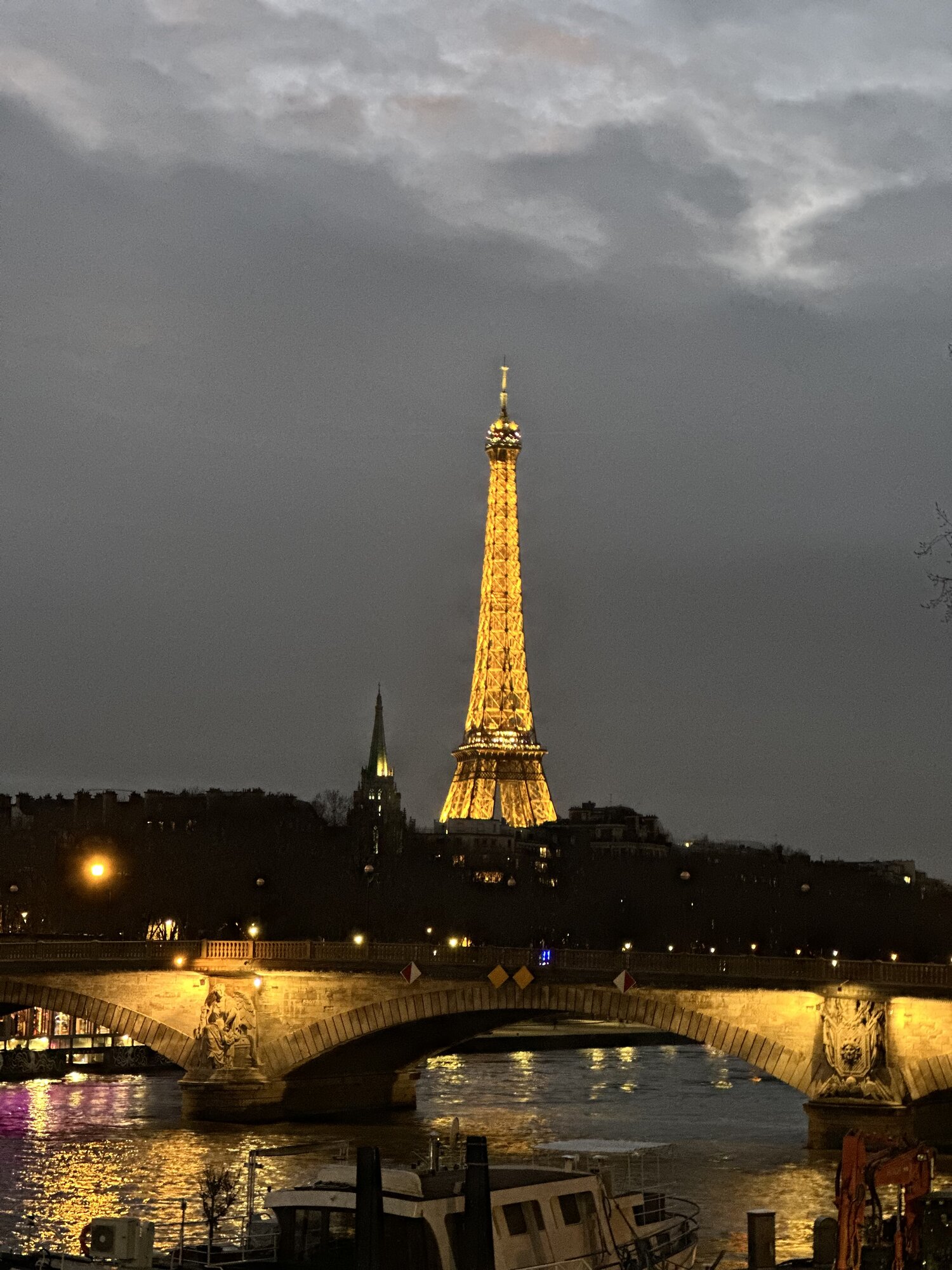
Bateaux Parisiens: Evening Cruise on the Seine — a highlight of the whole trip, and a gentle way to see the City of Light without the fatigue of a walking tour. This 2.5-hour cruise departs at 8:30pm from the Port de la Bourdonnais dock near the Eiffel Tower. Boarding was straightforward and senior-friendly, with ramps right at the pontoon (we'd notified them in advance by email, as recommended). We opted for the enclosed main floor and still saw everything with ease, with an informative audio guide included. Paris at night, from the water, is genuinely magical.
We loved Paris so much, we're heading back in April 2026.
No kick-backs for links. Ever.
This was stop one of four. Continue to Edinburgh → or read the whole series from the start →