i
Two flights of stairs from the hotel, give or take a volcano.
Cobblestones, Closes, and a Lucky Burns Night
Edinburgh is compact enough that you can practically see half its postcard shots from one hotel window, which is exactly the kind of city that lulls you into thinking it'll be easy on aging knees. It mostly is — right up until it very much isn't. Edinburgh Castle sits on top of an extinct volcano, because apparently flat ground was never part of the plan, and the Palace of Holyroodhouse is a gentle, mostly-downhill mile away with level gardens and ground-floor staterooms built for exactly the kind of mobility we were working with. The Old Town keeps everything within a 20-minute stroll of everything else, and the locals are the kind of warm that offers directions before you've finished asking. The catch is the “closes” — the narrow, stone-stepped alleyways that look charming in every photo and feel like a dare in person. We'll get to that.
As always, every link in these posts goes straight to the vendor. We don't take commission — on links or on reviews. Ever!
Trust us? Check out our Edinburgh Wander Map.
*As always, no commissions from our links. We encourage booking early and direct. These maps are always a work in progress, and are curated from all past trips and current research.
These pins also power ai-tinerary, our invite-only itinerary tool. Same stamps, same opinions.
Edinburgh is a compact, history-soaked city, and the medieval charm that makes it so photogenic is the same medieval charm that makes it hard on octogenarian knees. The cobblestones rattle wheels, ankles, and whatever dignity you walked in with, and the closes — those steep, stepped alleyways branching off the Royal Mile — are not a metaphor. They are actual, narrow, handrail-free staircases that the city built centuries before anyone involved cared whether you could get back out of one.
The fix, such as it is: map your routes in advance using the flatter pavement sections, skip the closes entirely unless you enjoy a dare, and lean hard on Edinburgh's locals, who will cheerfully flag the smoothest path before you've even finished the question. Book taxi assistance ahead of time to keep stairs to a minimum. With a central hotel and a little forethought, the city's magic stays gloriously within reach — we loved Edinburgh, and we're already plotting how to get back.
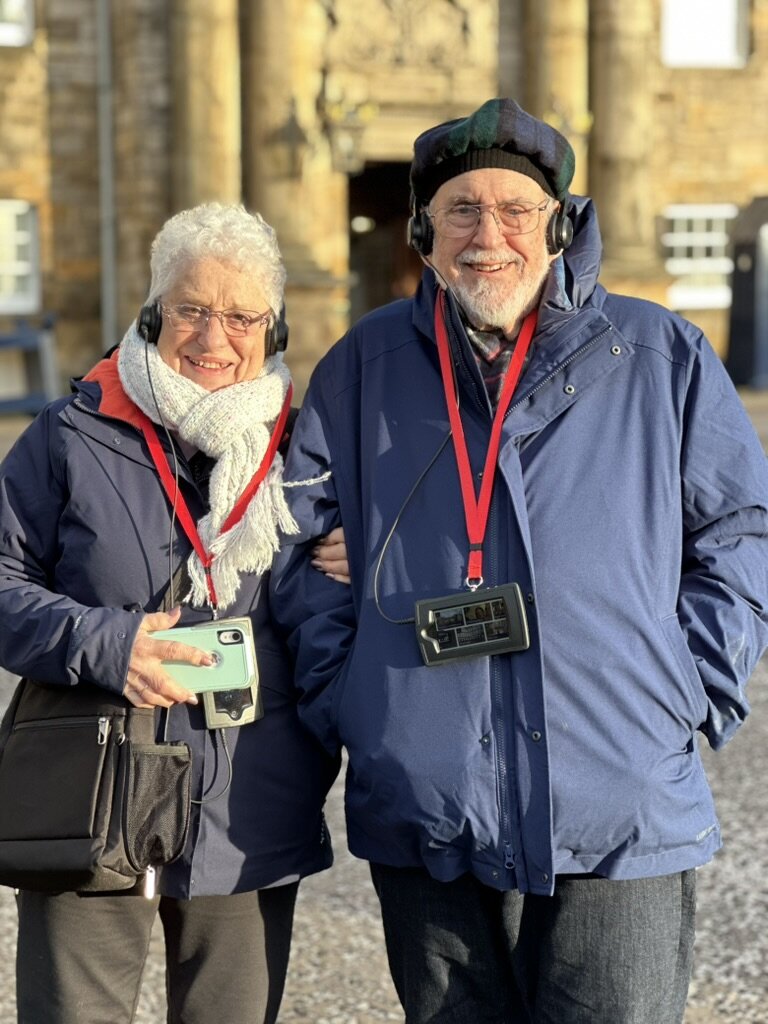
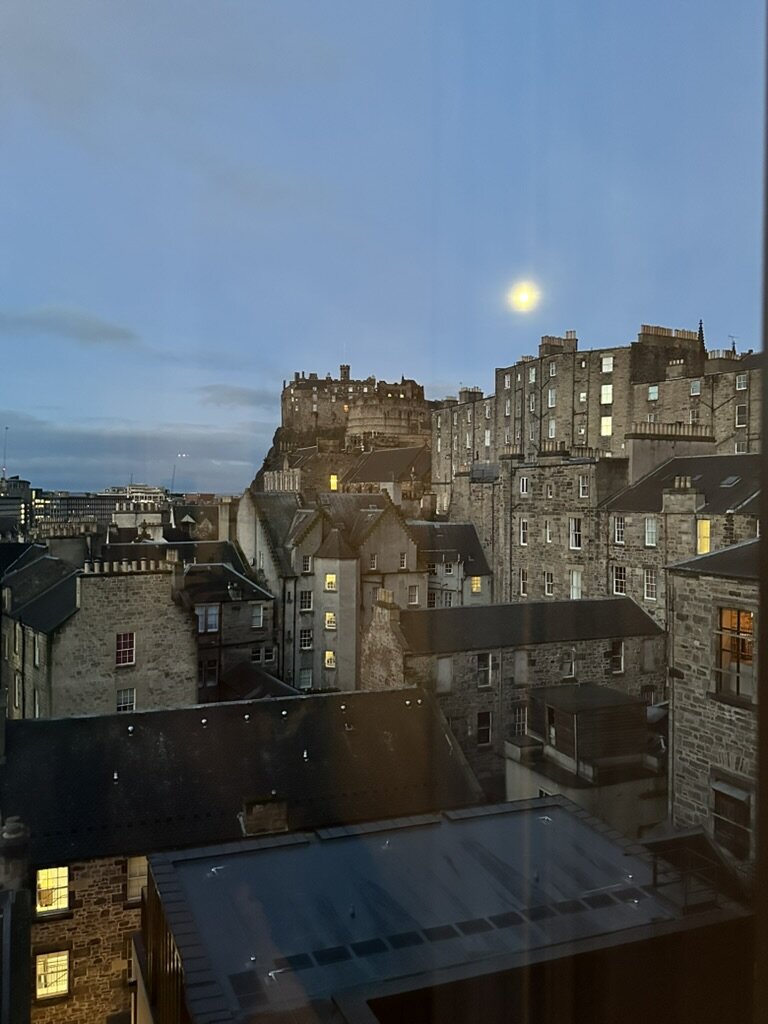
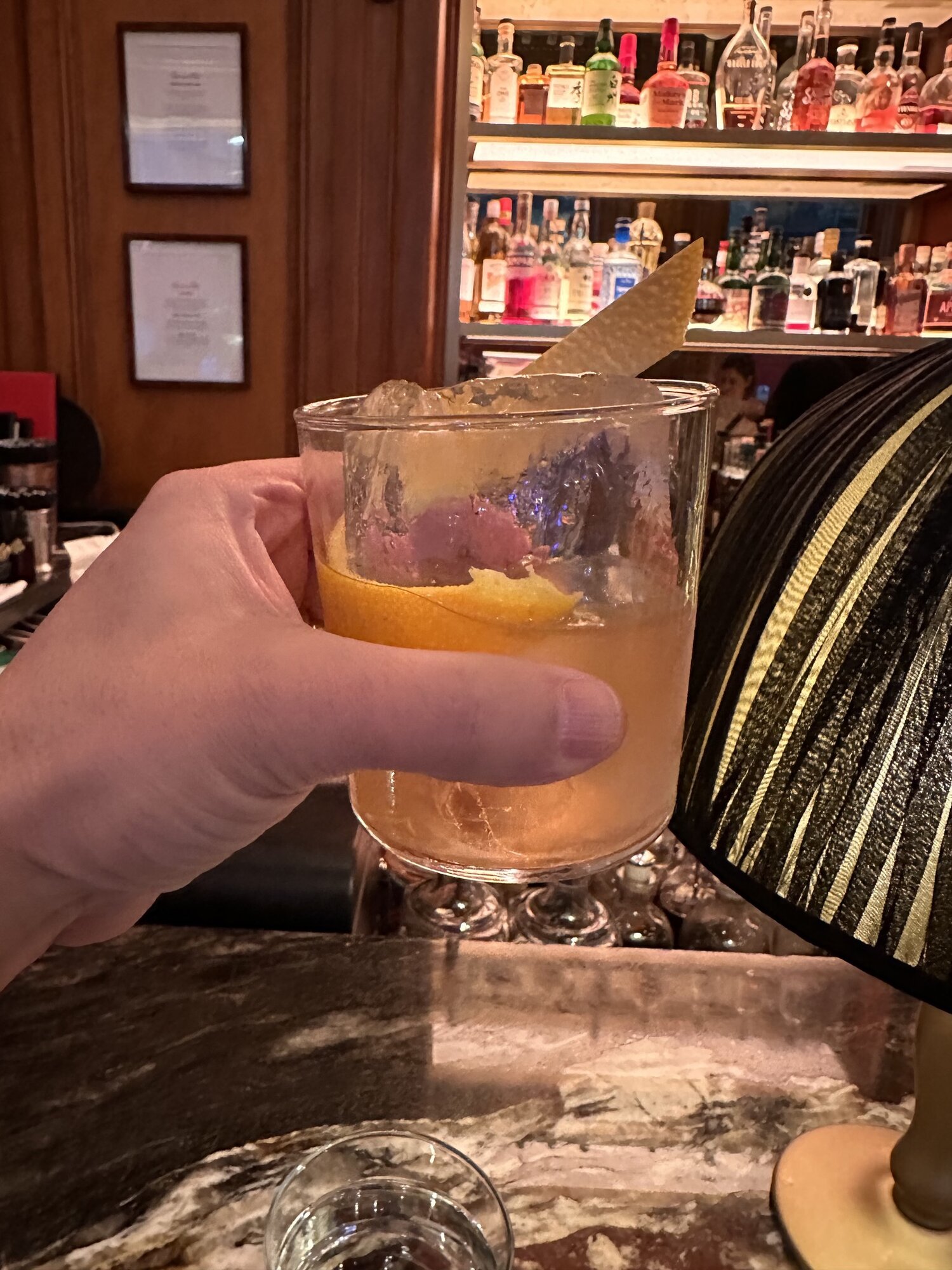
Base yourself in the Old Town and the rest takes care of itself. We chose Virgin Hotels Edinburgh on Victoria Street — yes, the one the internet insists inspired Diagon Alley — and we're so glad we did. It sits just below the Castle esplanade, with views of Edinburgh Castle from some rooms, an excellent breakfast, and an attentive staff. From the front entrance we could either walk up the concrete walkway to the Royal Mile or take two flights of stairs straight into the esplanade, and on the days walking wasn't going to cut it, a cab was never hard to find.
Edinburgh's compact medieval heart and Georgian New Town make exploration genuinely easy, with most major sites — the Castle, the Royal Mile, Holyrood Palace, Princes Street — within a 20-minute walk of one another, cobblestones permitting. We walked almost everywhere and grabbed the occasional cab when legs gave out; they're metered and easy to find. After a taxing day of sightseeing, we took a break on the city's double-decker sightseeing buses — our parents appreciated seeing a bit more of the city from the comfort of the lower deck. Pro tip: start at the Castle and walk downhill, not up. Be aware the Royal Mile is historic cobblestone, including a fair stretch of its sidewalks.
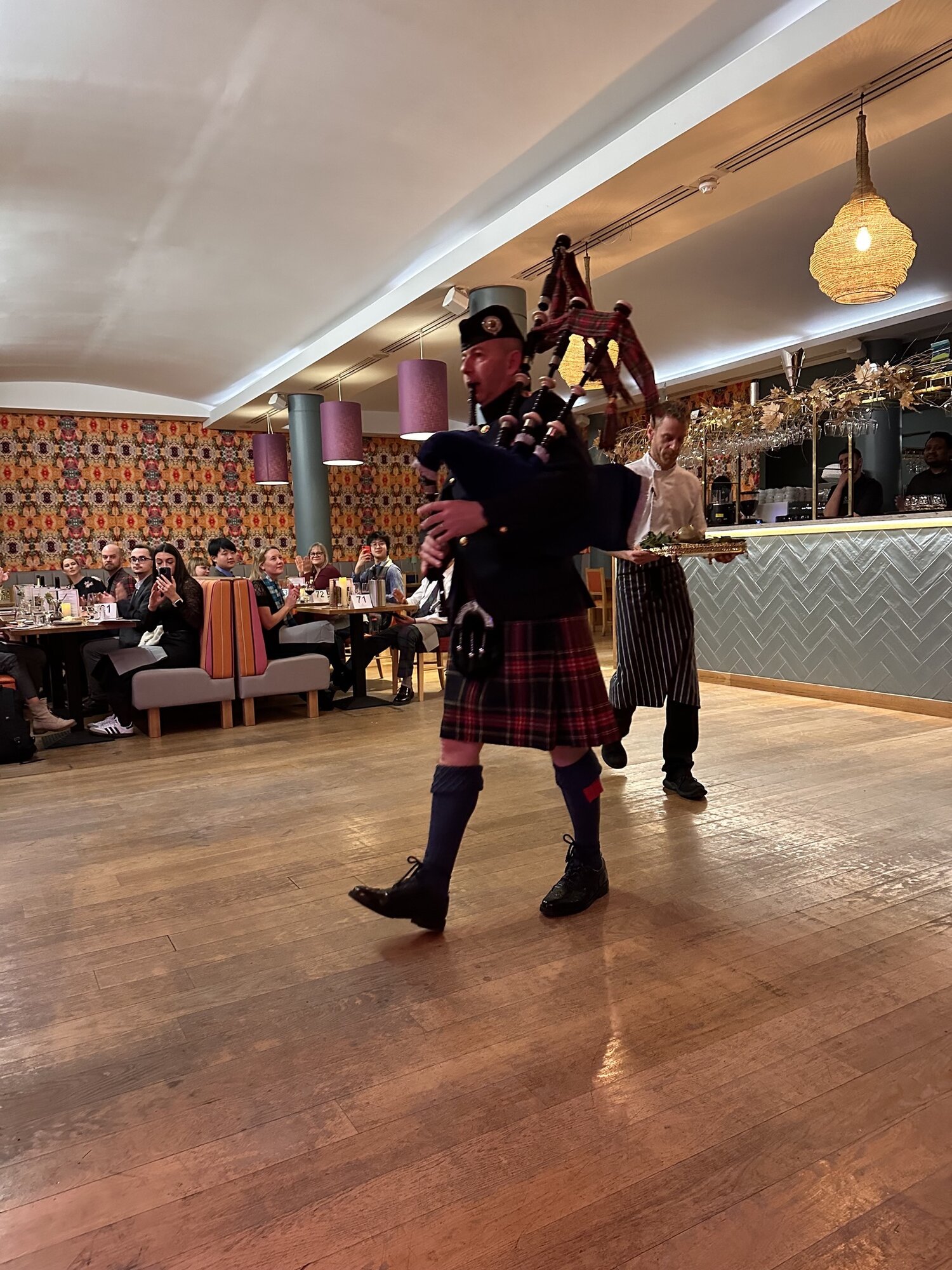
The Staches are great planners, but we have to admit when we just luck into something, and Burns Night was pure dumb luck. We rolled into Edinburgh on Robert Burns' birthday — January 25th — with no idea what that meant for the city. It means the whole place hums: Burns Night suppers in cozy pubs and grand hotels alike, haggis piped in with actual ceremony, whisky toasts, and “Auld Lang Syne” echoing off ancient stone. From our Old Town base we stumbled onto ceilidhs spilling out onto the Royal Mile and locals in tartan handing out drams and laughter, and a winter evening turned into the kind of Scottish warmth you can't actually plan for.
“Ev'n then a wish (I mind its power), a wish, that to my latest hour shall strongly heave my breast; that I for poor auld Scotland's sake some useful plan, or book could make, or sing a sang at least.” — Robert Burns, The Answer
We were a bit too late to get tickets to the National Museum of Scotland's Big Burns Ceilidh, which looked like great fun — next time. We were fortunate enough to land tickets to The Scottish Café & Restaurant's Burns Supper instead, which turned out to be a genuinely interesting way to take part in a local tradition and learn about a gifted poet we'd mostly known from whisky labels.
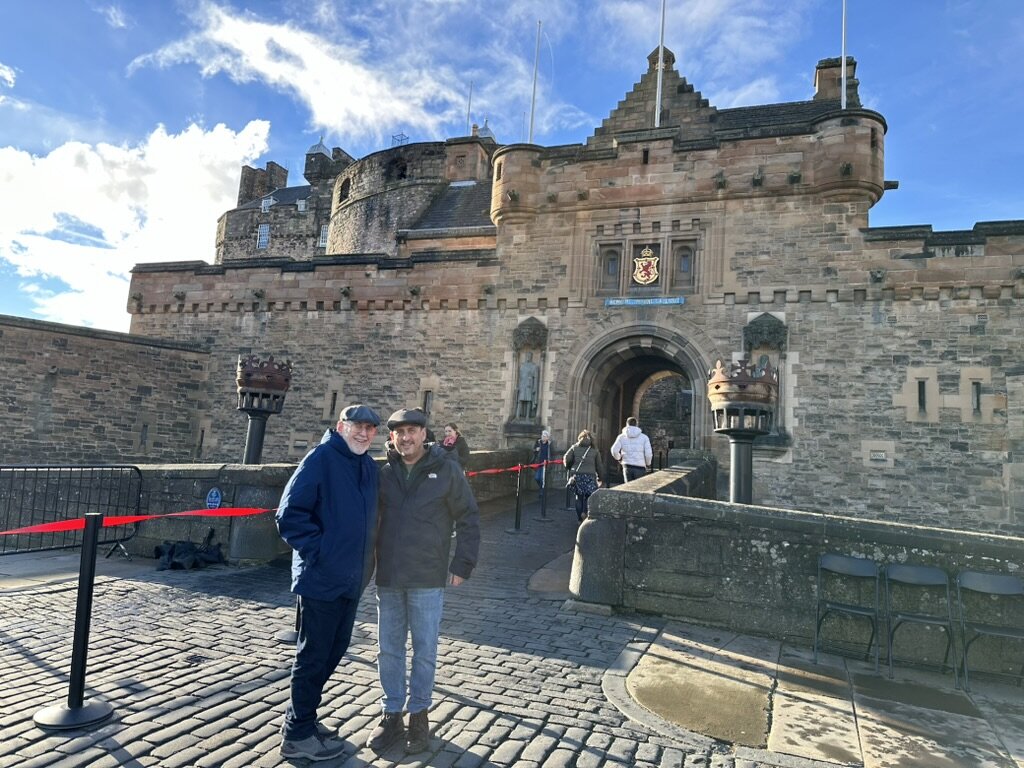
Edinburgh Castle — a historic fortress perched on top of Castle Rock, home to the Scottish Crown Jewels, the Stone of Destiny, St Margaret's Chapel, and the One O'Clock Gun. The steep, cobbled esplanade and uneven interior paths require decent fitness; a free mobility vehicle to the upper castle is available on request from staff at the entrance (it pauses around the One O'Clock Gun), but some areas remain genuinely inaccessible to wheelchairs. Dad could not handle the stairs required to see everything inside, so he spent that time at the gift shop and on a nearby bench while Mom made it to the top — the single toughest mobility call of the whole stop.
Palace of Holyroodhouse — the King's official Scottish residence, with Mary Queen of Scots' chambers, the state apartments, and the ruins of Holyrood Abbey, which were especially imposing. It's a completely different experience from the Castle, and being much newer, it's also much more accessible: level or gently sloped throughout, with lifts to the upper floors. Manual wheelchairs are available to borrow, and most areas are step-free except the Abbey ruins themselves, which are cobbled and uneven.
The Royal Mile — Edinburgh's historic spine, a mile-long cobbled descent from the Castle to Holyroodhouse, lined with closes, shops, pubs, and landmarks like St Giles' Cathedral. The steep gradient (up to 1-in-10 in places) and uneven stone setts make it genuinely challenging for wheelchairs, pushchairs, or anyone with limited mobility — use the side streets for gentler grades, or take an accessible taxi between the top and bottom.

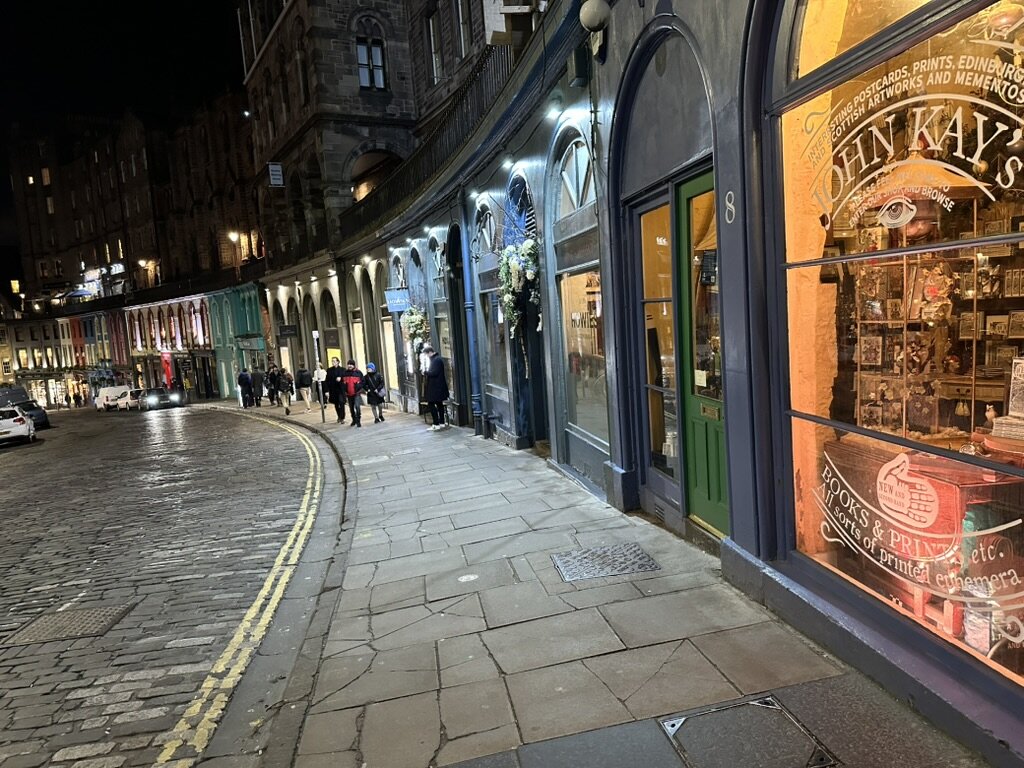
Victoria Street — a picturesque, curved Georgian street in the Old Town, famous for its colorful shopfronts, independent boutiques, and its rumored status as the inspiration for Diagon Alley. Also excellent shopping — He-Stache walked away with a proper tweed jacket and vest combo. It's steeply cobbled and stepped in sections, difficult for wheelchairs or anyone with mobility impairments; use the flatter George IV Bridge at the top or the Grassmarket at the bottom instead.
The Real Mary King's Close — a preserved 17th-century underground street hidden beneath the Royal Mile, with guided tours into plague-era social history, ghost stories, and daily life in Old Town Edinburgh. We had tickets. We did not get to use them. There's no wheelchair access into the historic listed building, and the tour itself involves 58 descending and 38 ascending stone steps, uneven cobbles, steep inclines, and low ceilings — genuinely unsuitable for mobility impairments, support chairs or not. File this one under "looked incredible, had to skip it."
Mobility-impaired warning: the closes. The Staches could have spent hours exploring the many closes branching off the Royal Mile and everything they hide. Despite careful research, we failed to appreciate just how daunting these can actually be for anyone with mobility issues — there are often no handrails, and the stairs vary wildly in height and surface. Once you're in a close, it can be genuinely difficult to get back out. We found ourselves in one extremely steep stairwell with no handrail at all, and had no choice but to make our way slowly down, since going back up simply wasn't possible for Dad. If you have any mobility concerns, we strongly suggest avoiding the closes entirely — whatever unique glimpse into Edinburgh's past they offer isn't worth the stairwell you can't climb back out of.
The Staches loved Edinburgh, and can't wait to return.
No kick-backs for links. Ever.
This was stop two of four. On to London → or read the whole series from the start →