i
Headsets on, opinions off. Briefly.
Black Cabs, Ramps, and One Very Determined Dad
Winter London with elderly parents turned out to be a gentle, slightly magical adventure: crisp air, twinkling lights, and history wrapped in a warm scarf. The very accessible black cabs whisk you to Westminster Abbey, the Tower of London, and the Churchill War Rooms, and Windsor Castle is a short ride outside town. Between sites you can warm up with tea, scones, and clotted cream in quiet corners made for resting. Winter also means fewer crowds, festive lights along the Thames, and a slower, more intimate pace. With carer concessions, pre-booked assistance, and plenty of benches, the city made it easy — mostly. The Tower of London did not get the memo, and we'll get to that.
As always, every link in these posts goes straight to the vendor. We don't take commission — on links or on reviews. Ever!
Trust us? Check out our London Wander Map.
*As always, no commissions from our links. We encourage booking early and direct. These maps are always a work in progress, and are curated from all past trips and current research.
These pins also power ai-tinerary, our invite-only itinerary tool. Same stamps, same opinions.
Visiting London with mobility challenges was nothing short of exhilarating — a city that rolls out the red carpet, and the ramps, for every visitor. From the moment we arrived at King's Cross to the moment we flew away, our parents appreciated the added assistance and ramps. London didn't just accommodate us; it embraced us. Radar-key loos every ten minutes, staff who asked “How can we make this easier?” — every detail whispered you belong here.
It isn't barrier-free everywhere, and we'd be lying if we said so. The Tower of London's White Tower is simply not accessible. Windsor Castle's cobbled hill and the windy loop around Stonehenge both demand a lot of walking over uneven ground. And the splurge-worthy “Behind the Glass” add-on at the Churchill War Rooms isn't wheelchair accessible either. Research each site's access page before you book, because London is very good at telling you the truth in advance.
Five glittering, barrier-free staches. We'd wheel back in a heartbeat.
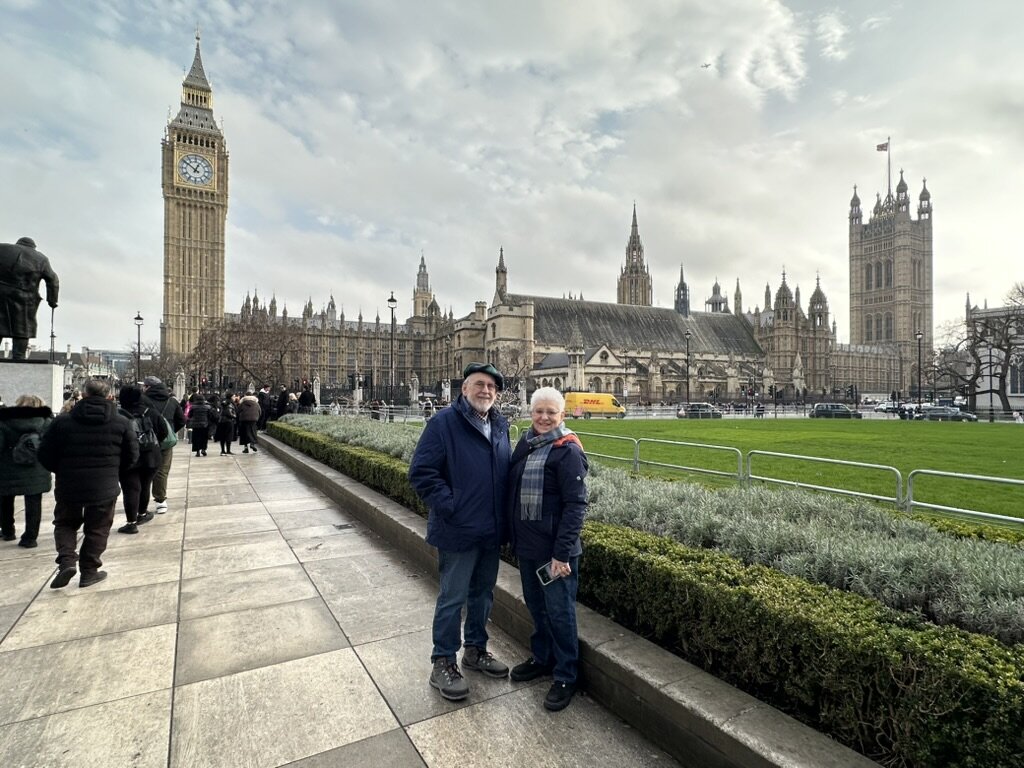
Once again, the Staches stuck with larger chains that had plenty of accessibility features, a good location, and in-house dining. We stayed with Marriott, as we held Ambassador status at the time of booking. St. Ermin's Hotel in Westminster is a great London base for mobility-impaired travelers with aging parents: a step-free entrance, spacious accessible rooms with roll-in showers and grab rails, and staff who greet you by name. It's a five-minute roll to Westminster Abbey, ten to Buckingham Palace, and fifteen to the Houses of Parliament, yet it sits on a quiet cul-de-sac away from the bustle. The bellmen are always happy to hail a black cab, and the drivers are full of great stories. The grand marble lobby, a sweeping staircase (bypassed by a discreet lift), and afternoon tea in the gilded lounge give every arrival a royal flourish — elegance without effort.
Here are the restaurants and cafes we ate at in London. We chose them for location, reviews, and accessibility — and yes, a few of them have stairs, so read the notes.
London's iconic black cabs (hackney carriages, if you're feeling formal) are a global benchmark for wheelchair accessibility, with every licensed vehicle required by law to be wheelchair-friendly. They have spacious interiors, high door openings, swivel seats, and room for one wheelchair. Drivers hop out, drop the ramp, stash the gear, and deliver you to the exact doorstep, usually with a ten-minute commentary on the war, your football team, or the correct way to make tea. Uber is fine, but a London cabbie is performance art with a meter.
We came down from Edinburgh on LNER First Class, Waverley to King's Cross: a roomy, quiet 2-1 seating layout with generous legroom, Wi-Fi, power at every seat, and complimentary food and drinks served at your seat. The 4.5-hour ride runs the East Coast Main Line past Northumberland's coast and Yorkshire countryside. Standard First Class tickets run roughly £150–£250 one-way depending on flexibility, so book ahead. Pro tip: sit on the east side of the train for the North Sea views. And if you're a Harry Potter fan, King's Cross has a small Platform 9¾ photo spot and shop — be prepared for two separate queues, the shorter one being for the store. LNER also runs an assisted travel service if you need help at either station.
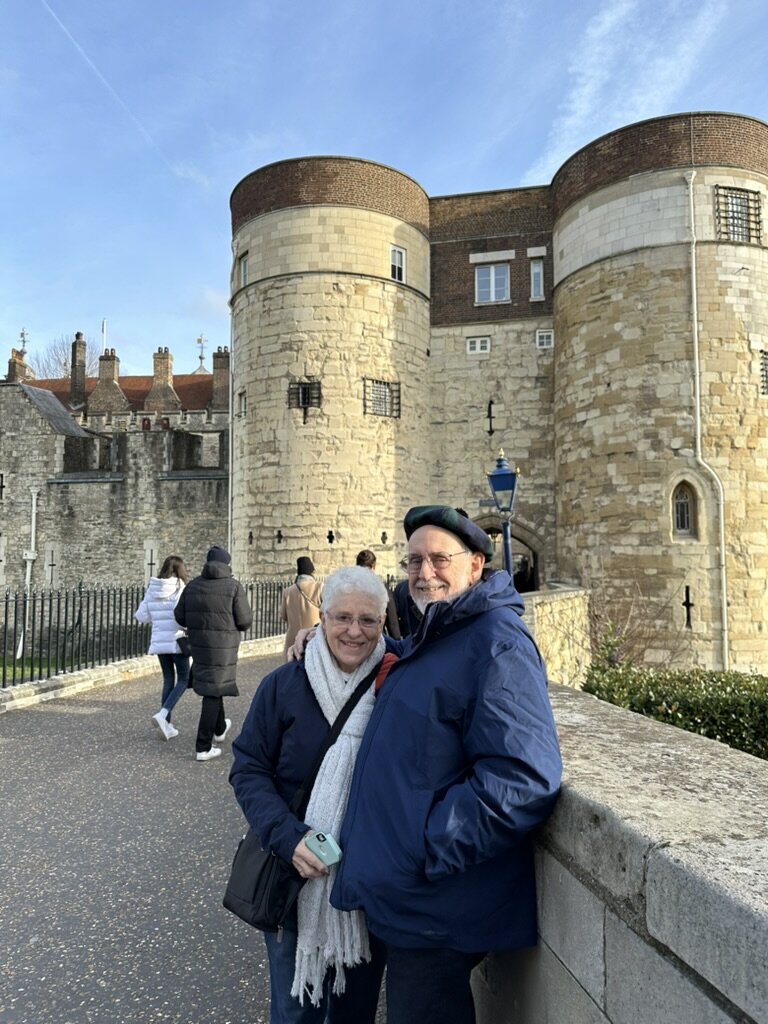
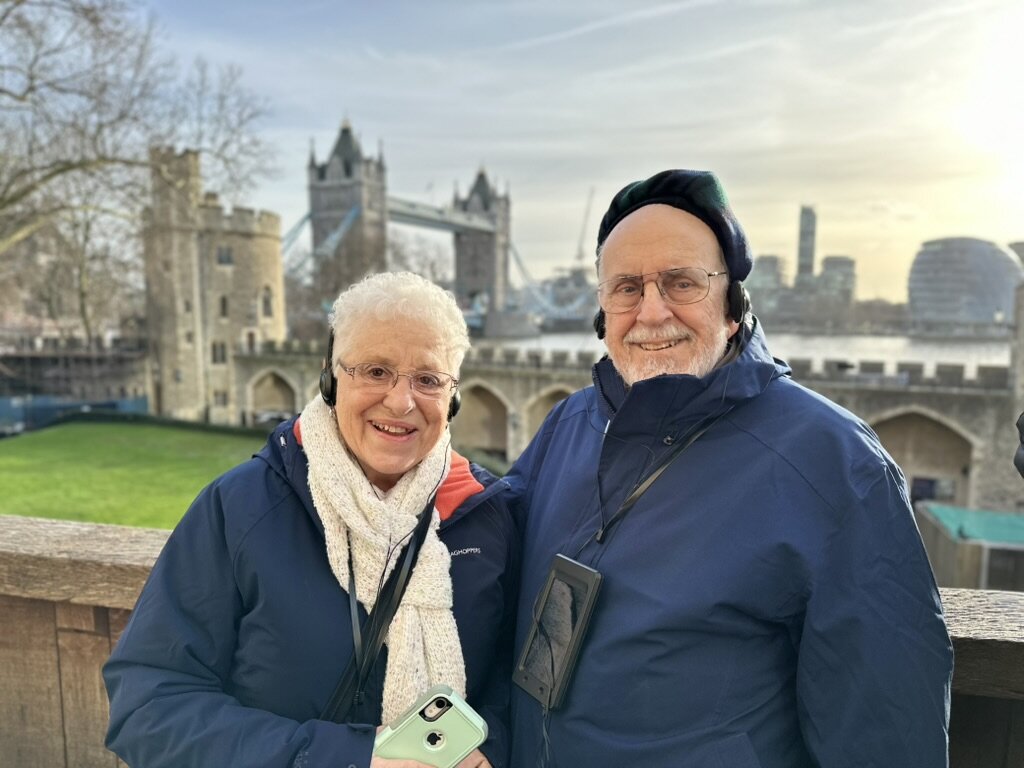
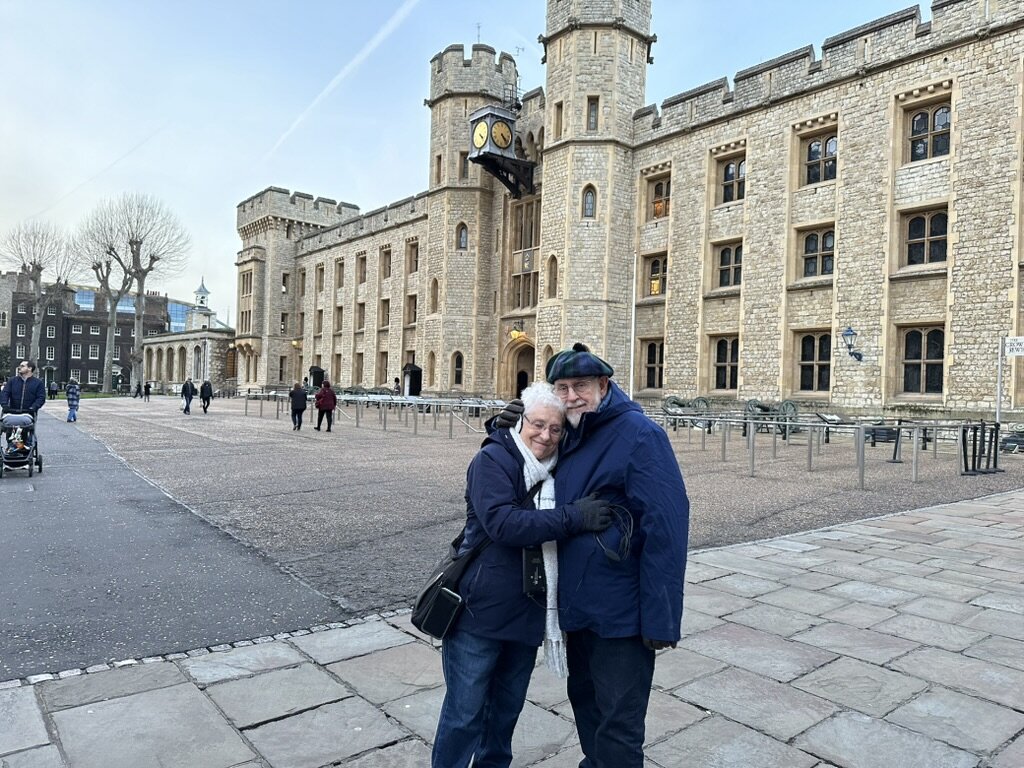
Visiting the Tower of London in winter with mobility-impaired in-laws is basically a medieval obstacle course with better gift shops. We divided and conquered. I whisked them into their first black cab straight off the train to the Tower, while He-Stache handled the luggage and hotel check-in. I'm the history buff, so it makes total sense that He-Stache enjoyed a nice Old Fashioned at the hotel bar while I dragged his parents across cobblestones so uneven they should come with a chiropractor on standby, past ravens with strong “I've seen things” energy.
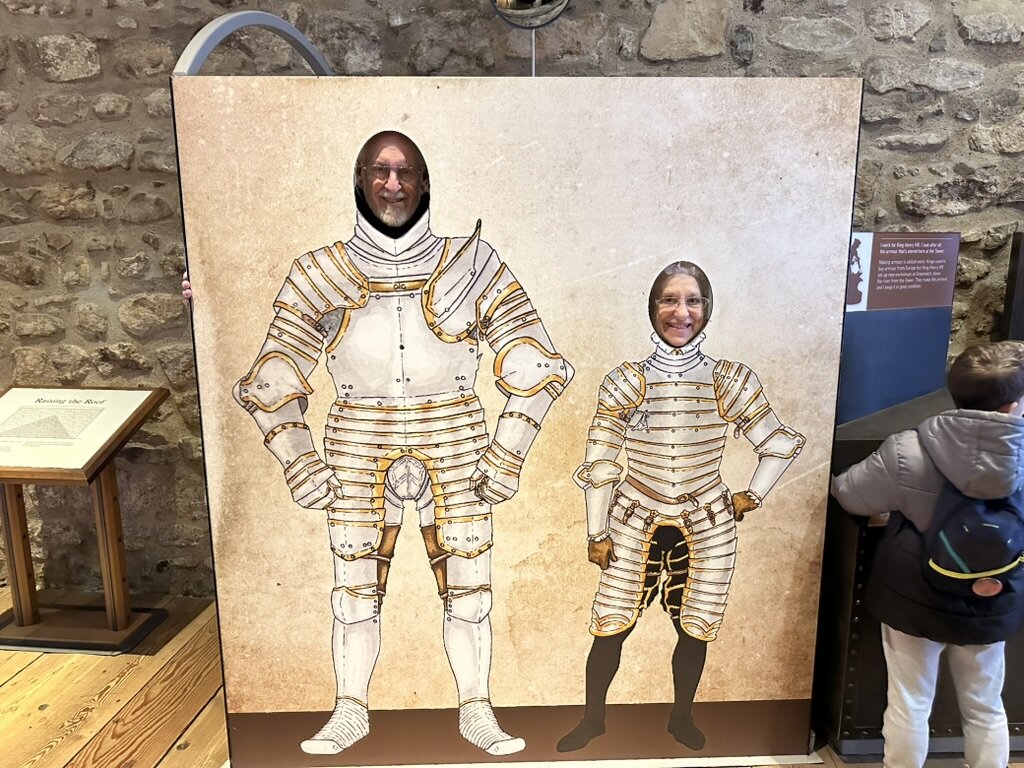
In actuality, it was my favorite part of the trip. Dad, who normally treats steps like summiting Everest, suddenly turned into Sir Edmund Hillary and conquered all three spiral staircases to the top floor without oxygen or complaint. My favorite memory is Dad reenacting battle scenes on the stairs. The man can seriously swing an imaginary sword and shoot arrows through a loophole. Meanwhile, Mom eyed the Imperial State Crown and asked the warder, “Can I just see if it fits?” And then there's Henry VIII's armor: they didn't just make it big, they basically built an extension for it. Dad joked, “There's Ozempic for that now!” 10/10, would hobble round again. Winter is the secret cheat code.
Mobility note: while the Tower of London is a sight to behold, it is not mobility-impaired friendly, thanks to its historic nature. The staff do their best with what they have, but some areas are simply not accessible — the White Tower most of all. Dad's stair-climbing triumph was his own doing, not the Tower's accommodation. Don't plan around it.
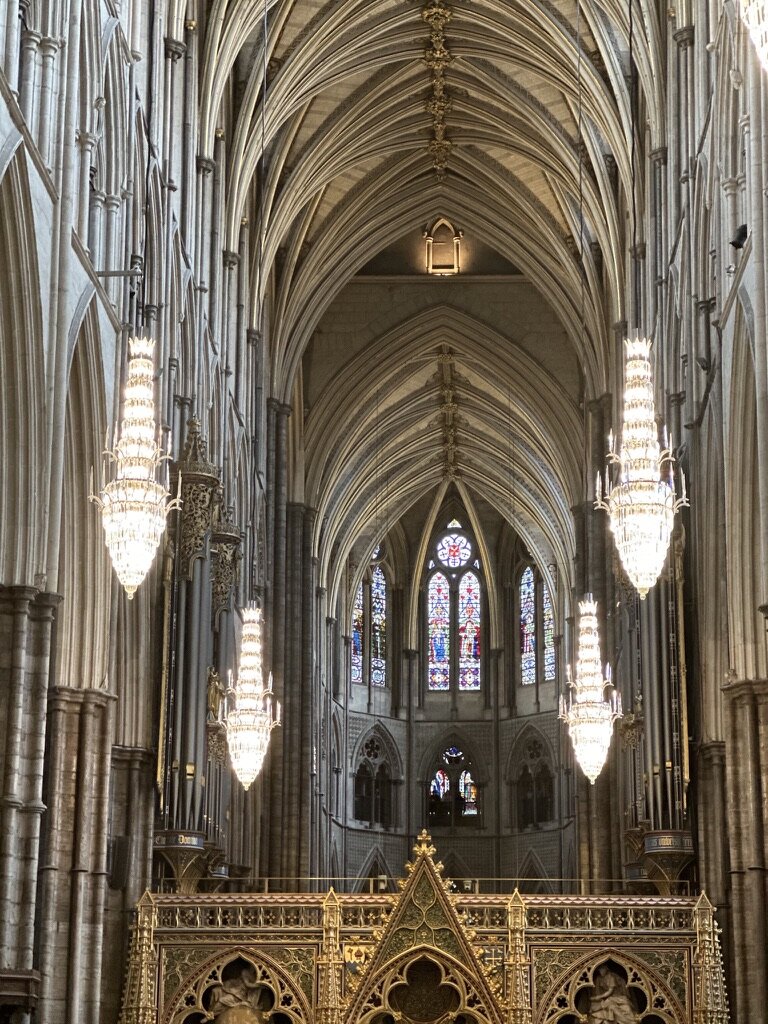
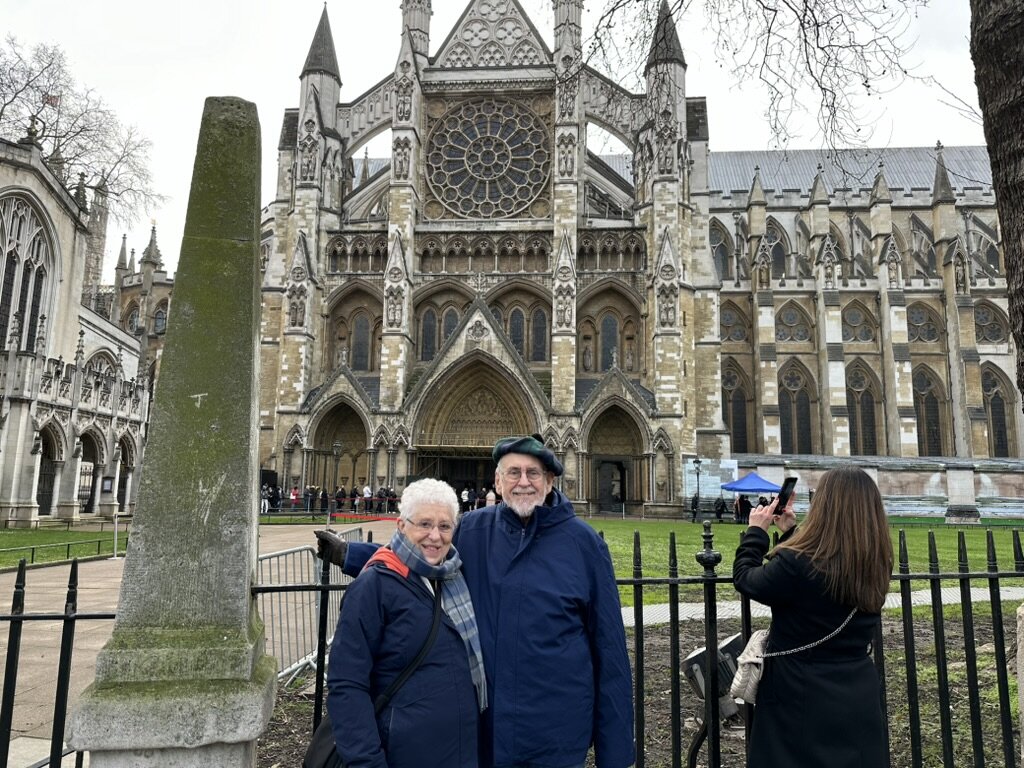
Westminster Abbey — a UNESCO World Heritage Site, coronation headquarters since 1066 (William the Conqueror started the trend and nobody's had the heart to move the chairs since), and the final resting place of 17 monarchs, half the poets you pretended to read at school, and Isaac Newton. This 800-year-old Gothic masterpiece now comes with 21st-century upgrades even the medieval stonemasons didn't see coming: a step-free side entrance on Dean's Yard, free manual wheelchairs on demand, lifts to every level (yes, including the Queen's Diamond Jubilee Galleries), wide aisles, and enough benches to keep even the most committed in-law from dramatic sighing. Large-print guides and audio tours mean Dad can finally admit he needs the big letters without losing royal dignity. TV only shows you the fancy coronation bit with the gold coach and the crown that weighs more than a toddler. In person it's a thousand years of drama, genius, and scandal crammed into one building, and you can take as long as you like because, miracle of miracles, it's actually mobility-friendly. You might even leave before closing time. Might.
Churchill War Rooms — the preserved underground bunker beneath Westminster that served as the British government's secret headquarters during World War II. Managed by the Imperial War Museums, it lets you step back in time through the Cabinet War Rooms, left largely untouched since 1945, including the Map Room, the Cabinet Room, and Winston Churchill's modest bedroom, plus the adjoining Churchill Museum's letters, uniforms, and audio clips. The entire area is wheelchair accessible. Pro tip: if you're able to, splurge for the “Behind the Glass” experience. Any history buff will appreciate getting that close to a pivotal time in our shared history — but it is not wheelchair accessible.
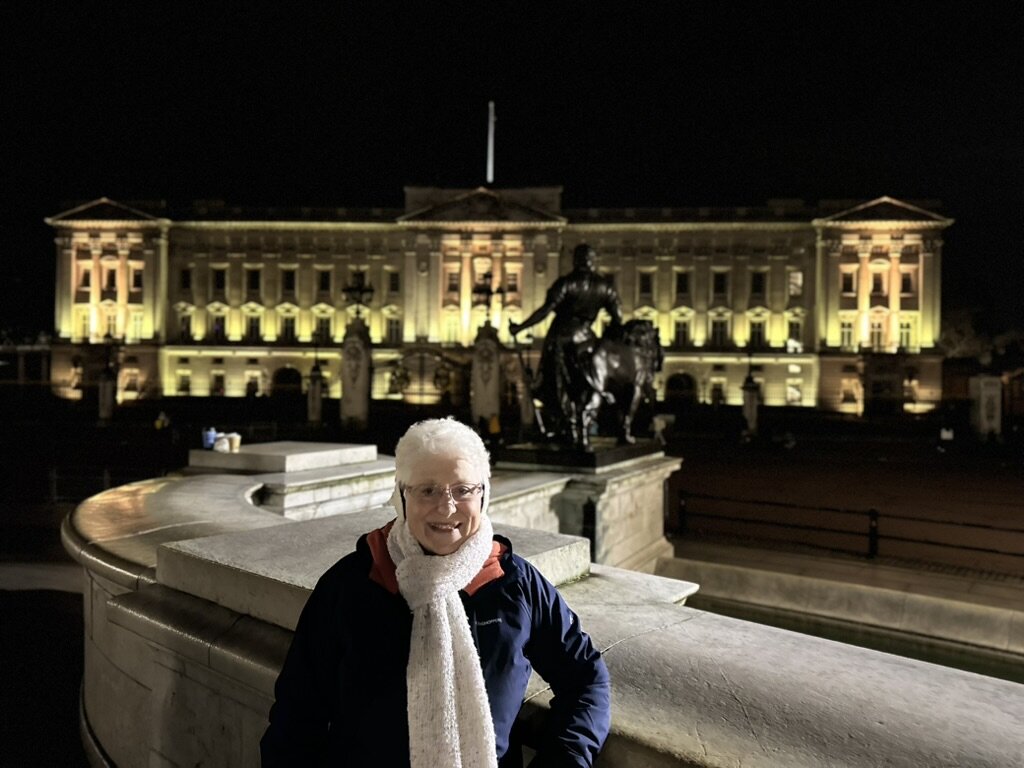
Buckingham Palace — because of our winter itinerary, we couldn't visit the interior, but we enjoyed the exterior grounds and the Queen Victoria Memorial. Mobility note: the roundabout and memorial are wheelchair accessible to view, but getting up close takes some steps.
Windsor Castle & Stonehenge in a day — the classic British bus-tour combo that we cheerfully waved the in-laws off to, because “bus tours” are not in the Stache-cabulary unless the bus has a bar and zero schedule. Dad lasted about 15 minutes before declaring the gentle incline at Windsor “worse than Normandy” and retreating to the bus, but Mom (powered by pure spite and Werther's Originals) stormed the steep cobbled hill to the castle like she was retaking it for the Plantagenets. She then marched the windy half-mile loop around Stonehenge muttering that it was “just a big rock car park, really.” Meanwhile, back in London, we spent a heroic six hours traipsing every shop from Oxford Street to Covent Garden hunting for the largest possible suitcase to hold their souvenir haul: shortbread, teacups, Beefeater teddy bears, and approximately seventeen jars of clotted cream. The croissants, mysteriously, did not make the return-flight cut.
Mobility note: both Windsor and Stonehenge require a lot of walking over uneven, uphill terrain. There is lift access once you make it to the castle, and wheelchair and scooter rentals nearby.
London didn't just accommodate my slow-moving crew; it rolled out the red carpet, ramps included. They left exhausted, enchanted, and convinced the city runs on politeness and very steep history. Ten out of ten. Would geriatric again.
No kick-backs for links. Ever.
We flew Ryanair from Stansted to Venice. Air travel in Europe is far cheaper than in the US, but always double-check with your carrier — carry-on size and weight limits are the obvious ones, and Mom got flagged for her curling iron. Here's Ryanair's special assistance page.
This was stop three of four. On to Venice → or read the whole series from the start →